meditations on the theology of reception in art as social practice
brontë velez
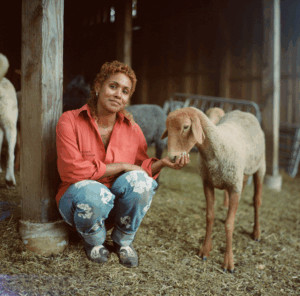
brontë velez is our 2025-2026 SOURCE Studio Research & Development Fellow. brontë’s art practice stems from the black christian tradition of the praise break: a moment in the service when the atmosphere is overcome by the anointing of gratitude, tongue, testimony, percussion, organs and ecstatic worship.
Through shapeshifting guns to make ritual objects for praising the earth, their practice asks: how do we take notice of and prostrate at the crooked places where praise becomes disarmament? How does reverence estrange us from the predictable? What are the gospels that can only emerge from our brokenness?
brontë’s inquiries emerge from their ongoing ritual and collaborative work with esperanza spalding, and other Black, Latinx, Indigenous, and spiritual leaders, and invite avenues for explorations that are simultaneously poetic, scientific, spiritual, and alchemical.
Over the last several months, we’ve worked closely with brontë as they deepen into their inquiries, tending to their process as it unfolds through unexpected leaps and turns. This dispatch is an offering from bronte, as they reflect on their time with SOURCE and the questions they’ve been holding in their multifaceted practice.
— SOURCE Studio
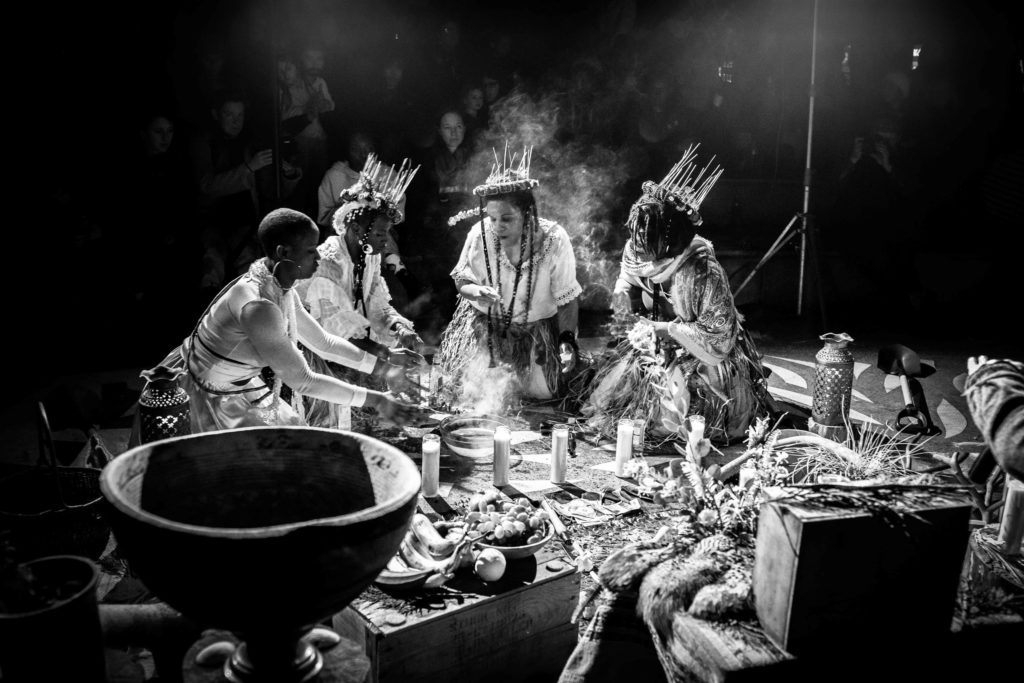
Gun washing at bakiné (FKA Lead to Life) ceremony. 2019, Oakland CA, Chochenyo Ohlone territory. Photo by Ayse Gursoz.
there’s a pattern emerging through my time in fellowship with SOURCE this year that signals an ontological and theological shift in my artmaking from transmission to reception.
for the past decade i’ve followed in a tradition of art practitioners who commit to making meaningful offerings and who deeply believe art can change culture. as a theologian, my art has been ministerial in function and served to illuminate how we can transform our material lives in a way that offers us the reflection of our divinity. i am so grateful to be trained in a lineage of black and latine feminist artists who committed their art to social practice, who know that beauty is a pathway to liberation and transformation.
in my years of ceremony with my previous practice, Lead to Life, which later became bakiné, we transformed guns into ritual objects to be utilized in ceremony at sites where black people and black places had experienced violence. because that work was a ceremonial practice, i was invited to protocolize my offerings. i learned through black and indigenous elders who surrounded me and brought me into loving correction that the work we were doing wasn’t art, it was ceremony, and ceremony requires a very specific liturgy to safeguard those participating in ritual activity.
this brought me to ask, how do we create the protection needed to collectively will ourselves into an epicletic act? epiclesis refers to the methods or invocations that call the spirit down and ask for the spirit to collaborate with us. i relate to spirit, or God, as the bridge that closes the distance between things, what conditions can we instigate so that the bridge can collaborate with us on behalf of our liberation on this planet?
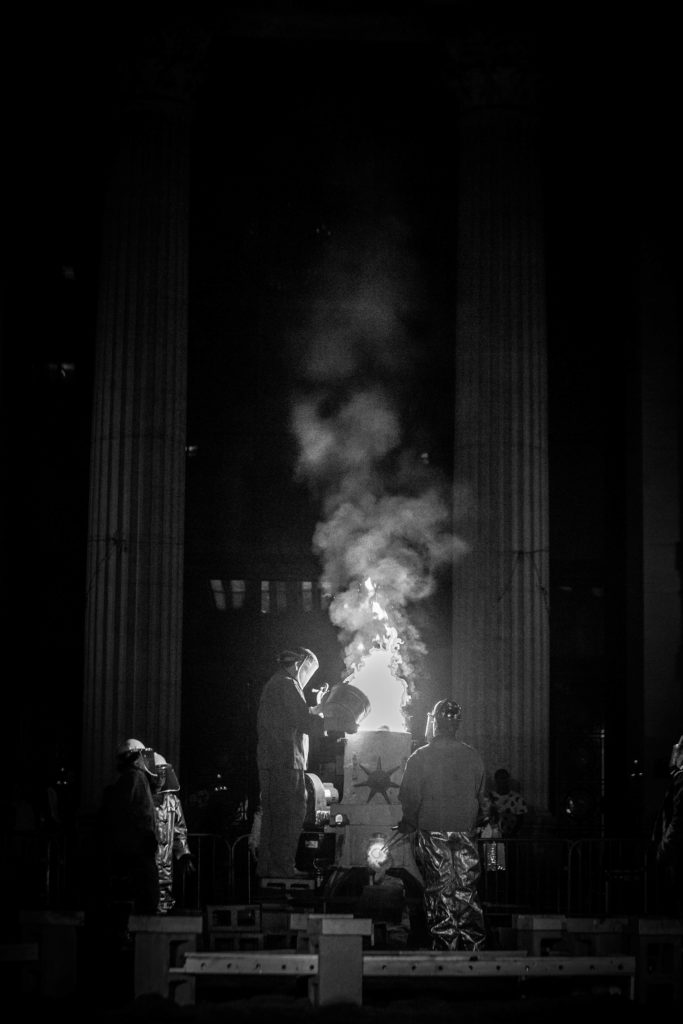
Gun melting in front of Oakland City Hall. Melting guns into molds that reflect the stars above Oscar Grant the evening he was murdered 10 years prior at bakiné (FKA Lead to Life) ceremony. 2019, Oakland CA, Chochenyo Ohlone territory. Photo by Ayse Gursoz.
in the earlier years of my practice i related to ceremony as a kind of ritual performance, something where we just needed a dope, beautiful arc powerful enough to transmit the message that we can change our material lives through experimenting with alchemy. pedro reyes’ project, palas por pistolas, that transformed weapons into shovels used to plant trees, and the prophecy of Isaiah 2:4, turning swords into plowshares and spears into pruning hooks, from the Tanakh, the Hebrew bible, both encouraged me to behold the ministry of witnessing the miracle of matter changing together. following these learnings, it felt important to turn an object of violence into something life affirming. in that transformative act, we have the agency to trust we can change our material lives together in the face of oppression.
what i came to learn through the gift of ceremony was that there was a methodology, a reception that was being asked for, that was far greater than what could be transmitted. and what was transmitted was actually a longing for collective space to be receptive together. to prostrate at the altar of presence to something we couldn’t even make or imagine as the actual miracle.
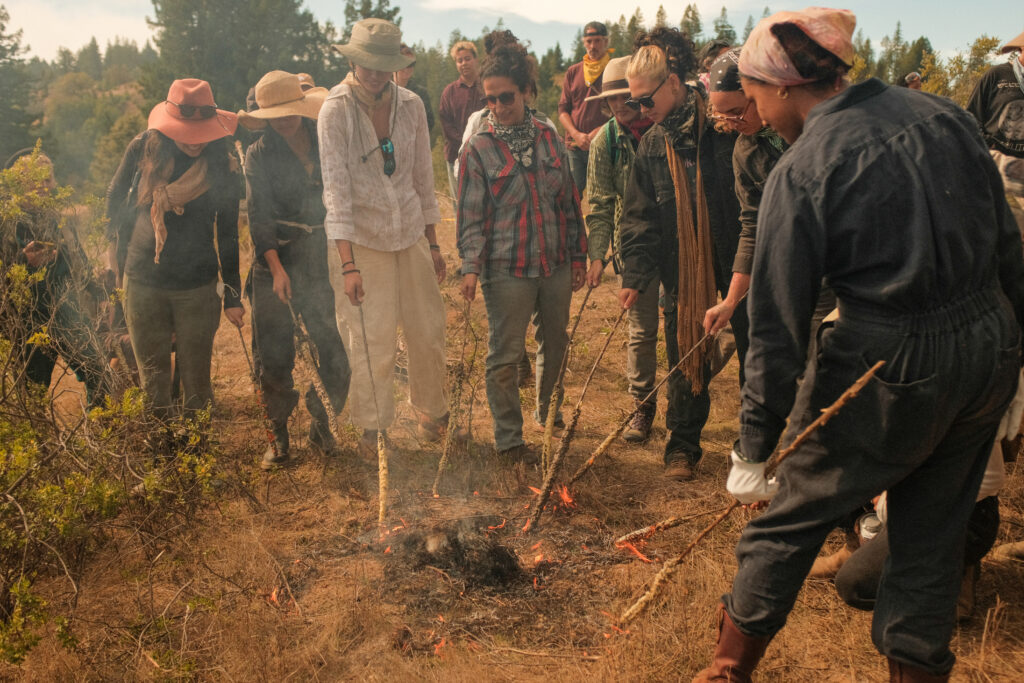
Beeswax mullein torches crafted with brontë with ATTUNE participants at The School for Inclement Weather. Kashia Pomo Territory, Northwest Sonoma County, CA. 2023. Photo by Ciara Ali Khan.
through these months in conversation and exchange with Siyona and Amanda at SOURCE, and through being an apprentice to Mel Chin’s practice, i’ve noticed we keep returning to this pattern of discussing reception. it encourages me to ask what is the phenomenology of reception that transforms the spirit of extraction so prevalent in modern artmaking? what practices help us to receive and be present so that the transmissions we offer come from unmediated encounters with our particular expression of divinity?
meditating on methodologies for reception drew me to consider the black Christian tradition of tarrying, an epicletic act that understands waiting. tarrying allows the indwelling spirit to manifest and take shape by being in time together to anticipate the spirit of God through collective presence and through collective agreement. tarrying challenges the phenomenology of miracles as isolated divine events and instead proposes that miracles are the result of a sustained, collective, and collaborative attention that beholds and welcomes the presence of the Holy Spirit. historically, black american churches hold tarrying services to invite in, welcome and await the hospitality of the Holy Spirit’s visitation.
i’m curious what this idea of tarrying has to offer. not just for how we make art, but to how we are reconstituted by forces greater than our ability to perceive them. what might tarrying teach us about artmaking as a field of encounter rather than output?
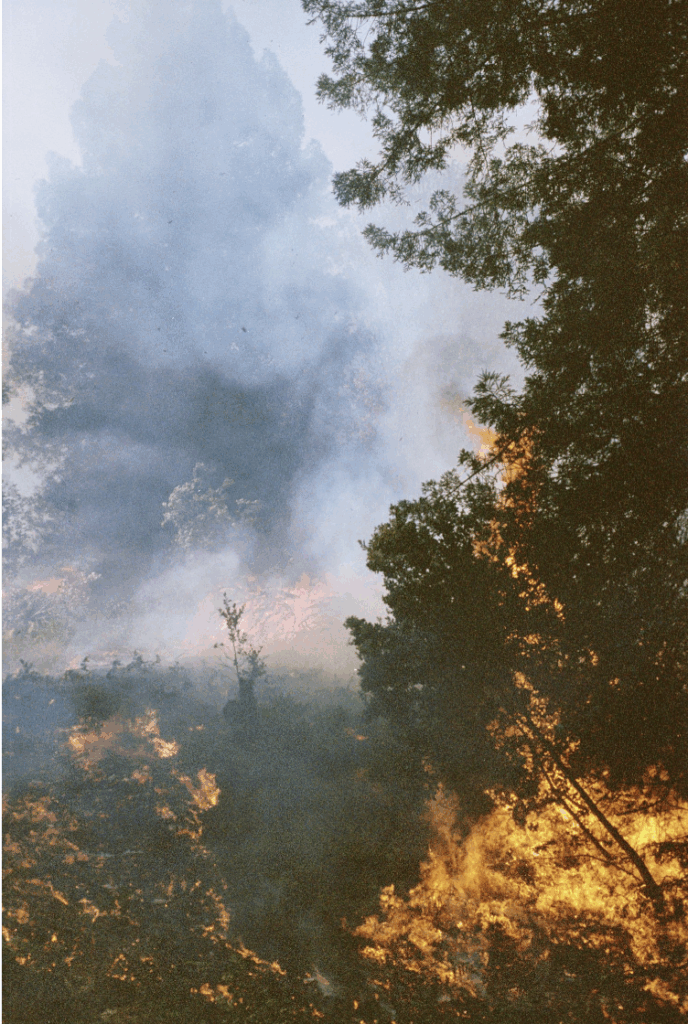
Prescribed fire hosted during ATTUNE at The School for Inclement Weather. Kashia Pomo Territory, Northwest Sonoma County, CA. 2023. Photo by T.K. Sloane.
as an artist and theologian i love the way art helps illuminate who the divine is to me and how it supports me to read scripture. i relate to God as whatever experiences, phenomena, presence, miracles, beauty, and absurdity bridge the distance between things. as a descendant of enslaved black people in Turtle Island, i am interested in the ways “black people were converted to Christianity and then converted Christianity” (Dr. Eric Williams, Duke Divinity). i am interested in that creative labor, syncretism, and resistance. i am moved by how black people came to intimately reclaim a God who was appropriated to instigate and justify harm and violence against them. i am compelled by the imagination required to find the medicine in the wound.
i think a lot about the scripture Isaiah 6 in the Tanakh. in the passage, the prophet Isaiah receives a vision of God in the temple surrounded by seraphim, the angels who are closest to God. as they cry out in praise the temple shakes and fills with smoke. Isaiah cries out that he is unworthy to witness this revelation as “a man of unclean lips.” then, one of the seraphim approaches him and touches a coal from the altar against his lips. out of this disabling and synesthetic act, Isaiah’s attunement to God widens. whereas Isaiah could first only witness God, now Isaiah is also able to hear God ask, “Whom shall I send, and who will go for us?” Isaiah enthusiastically volunteers, only to be given a prophetic commission that requires Isaiah not to be fluent, but to be illegible: “Keep listening, but do not comprehend; keep looking, but do not understand.” Isaiah is tasked with dulling perception and delaying revelation to the people until everything is destroyed.
one reason i return to this passage so often is because i’m fascinated by the seraphim and how they betray the angelic imagination we have inherited. rather than white, blonde, anthropomorphic beings with pleasant, harp-shaped wings, these attendants of the divine throne inhabit a different creatureliness, “each had six wings: with two they covered their faces, and with two they covered their feet, and with two they flew” (Isaiah 6:1-4). they remind us that what attends God is a fugitivity and mystery too impossible to be fully witnessed.
and of course, i’m drawn to the passage because Isaiah’s prophetic commission, where he is called by God to communicate a message to the people, is instigated by eating fire. as a fellow fire-eater (meaning i learned how to swallow fire for performance!), i was thrilled to behold a scripture binding together fire, mouth, and prophecy! why does speaking in tongues require the altar of the mouth to be purified through flame?
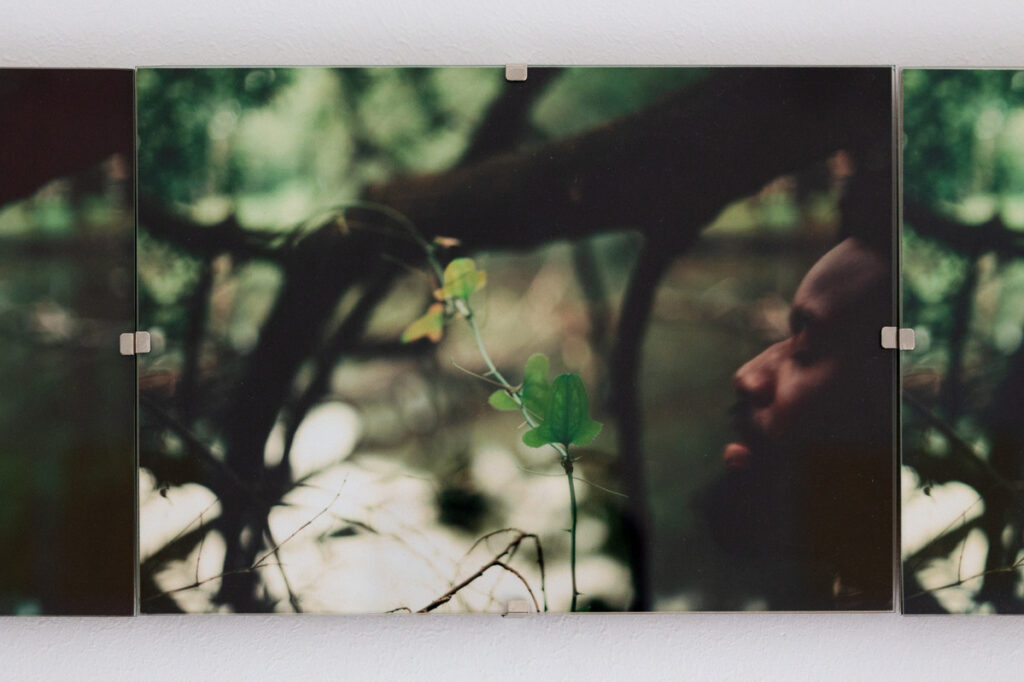
Ellis, JJJJJerome. Exposure. 2024–present. Film photographs. Installation view. JJJJJerome Ellis Selected Works 2021 – 2023 / Prosopopoeia, Vienna / May 30 – July 28, 2024. Photo by Lucas Messner.
JJJJJerome Ellis’ Exposure helps me read Isaiah’s commission as the holy dysfluency of kairos – how God’s timing is revealed through rupture. in Exposure, Ellis, who stutters and collaborates with the stutter as theophany, approaches plants and expresses their gratitude to the plants aloud. when Ellis stutters, Ellis opens the camera’s shutter and then closes the shutter when the stutter stops. through Ellis’ work, we can read that the prophetic commission and God’s timing stammers. prophecy disobeys the temporality of empire.
the camera as an object embodies a mechanics of capture which seeks to fix and archive the ephemeral. Ellis’ Exposure challenges the object’s sturdiness by drawing the shutter’s witness into crip time. the result is images that do not emerge from immediate or smooth revelations but instead visibilize and move at the pace of disability. gratitude becomes stretched and ineffable. slowing the shutter speed lets more light in, resulting in mostly blurred images where the plants rather than the artist’s profile, are pronounced. this same structure appears in Isaiah 6, where Isaiah’s commission from God requires a suspension of clarity. Isaiah’s dysfluency does not hinder revelation but shapes it.
i am suggesting that a more rigorous artistic precision emerges from the ecological capacity to pay attention. to be anointed by attention itself and to let that attention transform what we offer. how does our inability to articulate how we have been encountered slow the shutter? how might slowing the shutter allow us to be witnessed in that stammering? like Ellis, our varied approaches to pronounce the encounter becomes the offering. to let the coal of a world on a fire slow our speech down. to let “my senses [be] your instruments” (Pir Zia Inayat Khan). to liberate ourselves from the mechanics of industrialized artmaking and production that miss the true prayer of receptivity, that get ahead of the medicine of presence. i long for a stammering, waiting, suspending practice to be rhythmic with the grammar of God’s time and revelation.
rather than producing what we think we are supposed to say, do, or give in these times through contrived work that attempts to be meaningful, how are we willing to be witnessed being changed together? what does that transparency require? how does it shift the atmosphere? how in that transparency are we able to see and know who God is?
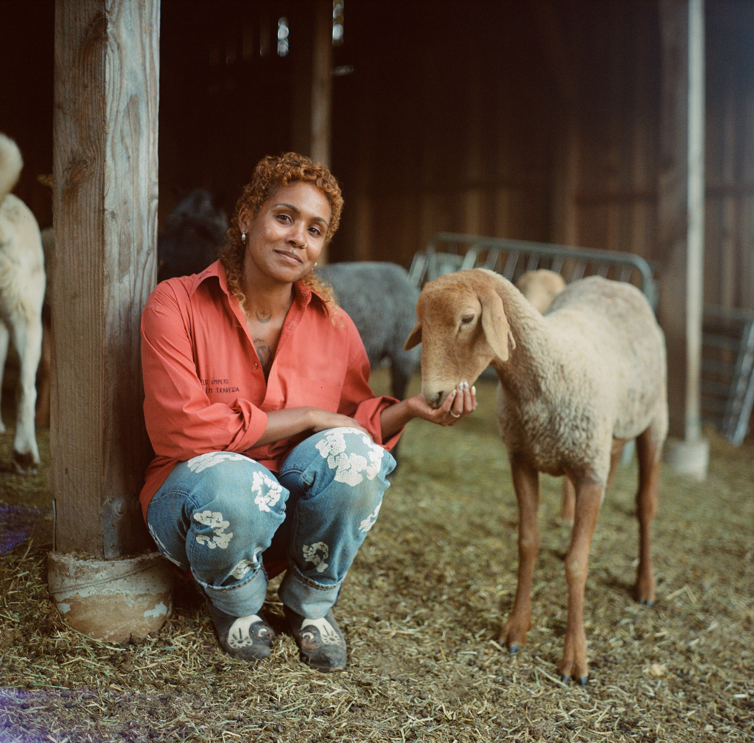
brontë velez (they/elle) is a black-boricua transdisciplinary ritual artist, shepherd and cultural worker. their eco-social art praxis is an intergenerational prayer to resanctify labor with land through rebuking the hauntings slavery has had on our precious relations with earth-rooted ritual and craft. brontë’s ministry is committed to re-ecologizing the roots of pastoral care.
brontë serves as the artistic director for bakiné ritual arts studio (FKA Lead to Life) and adult programs director/educator for Weaving Earth’s ATTUNE program. brontë is co-conjuring an absurdist opera with esperanza spalding about a frequency that can disarm, and practicing pastoral care (in an ecological and ministerial sense) as a co-steward of The School for Inclement Weather in Kashia Pomo territory in northern California. brontë is currently an MDiv candidate at Duke Divinity.