Skip to content

on crafting a homemade field of love (part 1)

    on crafting a homemade field of love (part one)

    A reflection and meditation by brontë velez

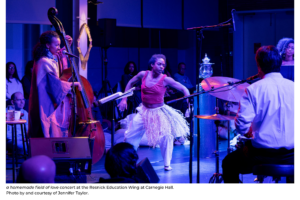
    one of my dear friends and co-collaborators, esperanza spalding, invited me to curate the environment for her concert, called homemade field of love, featuring Sista Docta Alexis Pauline Gumbs. the concert was held this past February as a part of Carnegie Hall’s Well-Being Concerts, a series that affirms music’s gravity to transform spiritual, emotional, mental and physical wellbeing. 

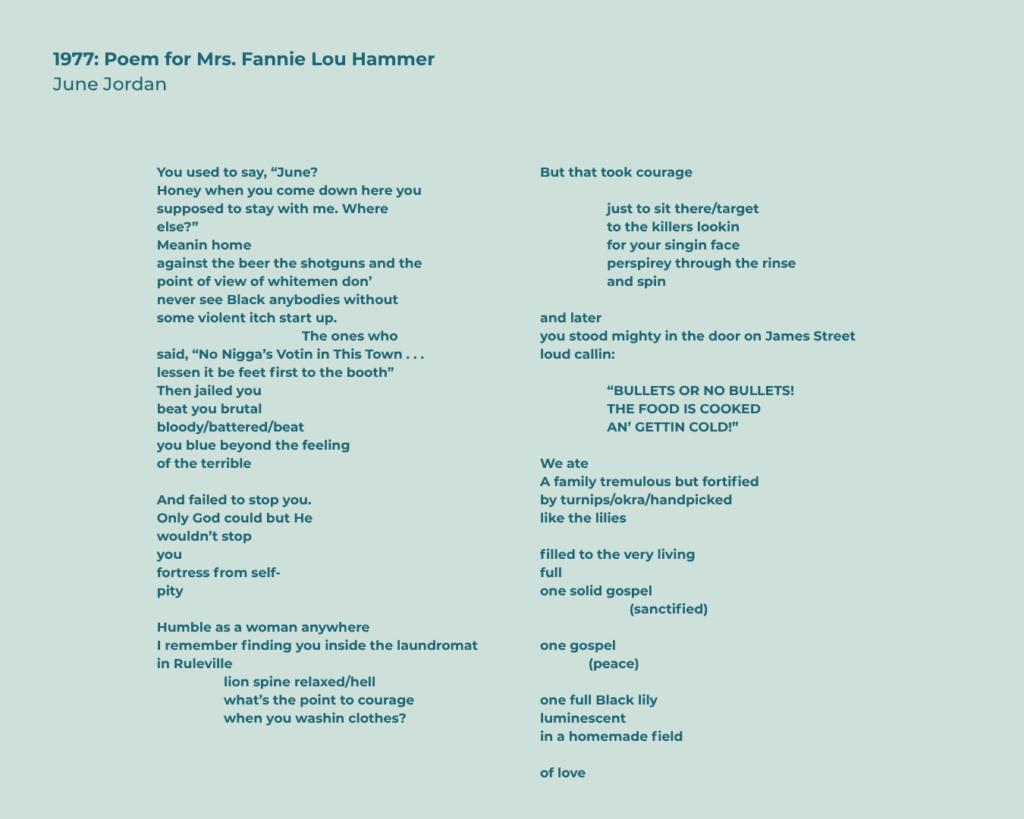
    the evening of the homemade field of love followed June Jordan’s 1977: Poem for Mrs. Fannie Lou Hamer and was replete with music, poetry, dance, and recitations set in the company of Sista Docta Alexis’s black feminist historiography — amplifying black feminism as a cosmology that conspires the world toward the communion and livability of tenderness. 


    Alexis’s offerings followed the wisdom and teachings of June Jordan, Fannie Lou Hamer, Bernice Johnson Reagon, and Sweet Honey in the Rock, tracing their relationships and exchanges with one another and their relationship to the land and site we gathered in. Alexis emphasized the well of merit shimmering in the ground beneath us: that if we are present to the ancestral inheritance of our foremothers, human and more-than-human which is always available to us and within each of us, we can attune to our capacity to cool the water, clean the air, and change matter through “the vibrational technology in the power of music.”

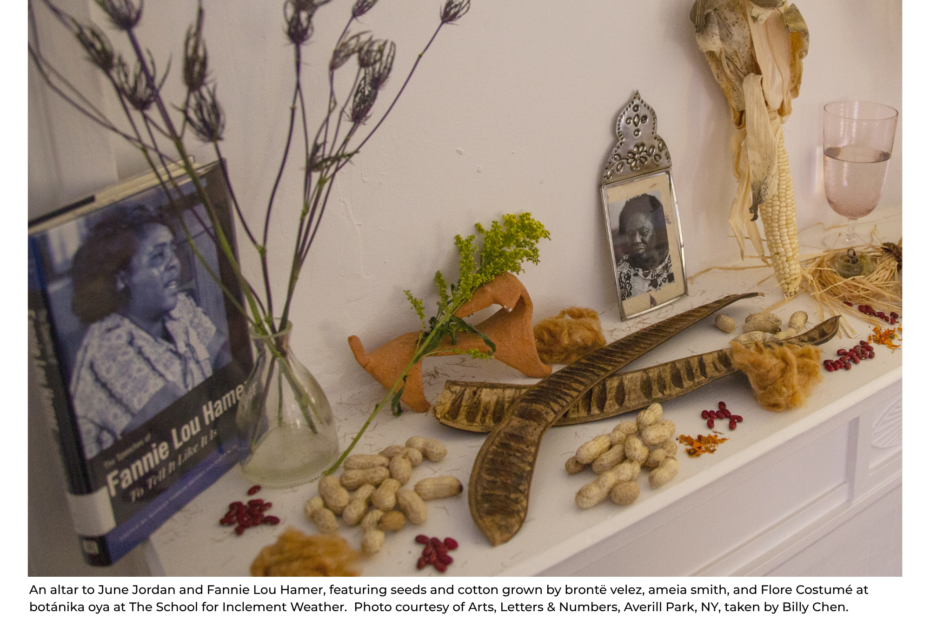
    following June Jordan’s 1977: Poem for Mrs. Fannie Lou Hamer and Alexis’s ministry of caring for black feminist language by drawing it into our breath, matter, offering, and being, my curation for the environment asked: how might the sacraments in this space honor our ancestors’ dreams for more “black livingness,” as Dr. Katherine McKittrick calls it? how might we follow Alexis’s wisdom to read and live June Jordan’s line — “homemade field of love” — again and again? to believe we can create environments of refuge for ourselves and one another? to inhabit those homemade fields of love that ancestor June experienced from ancestor Fannie?

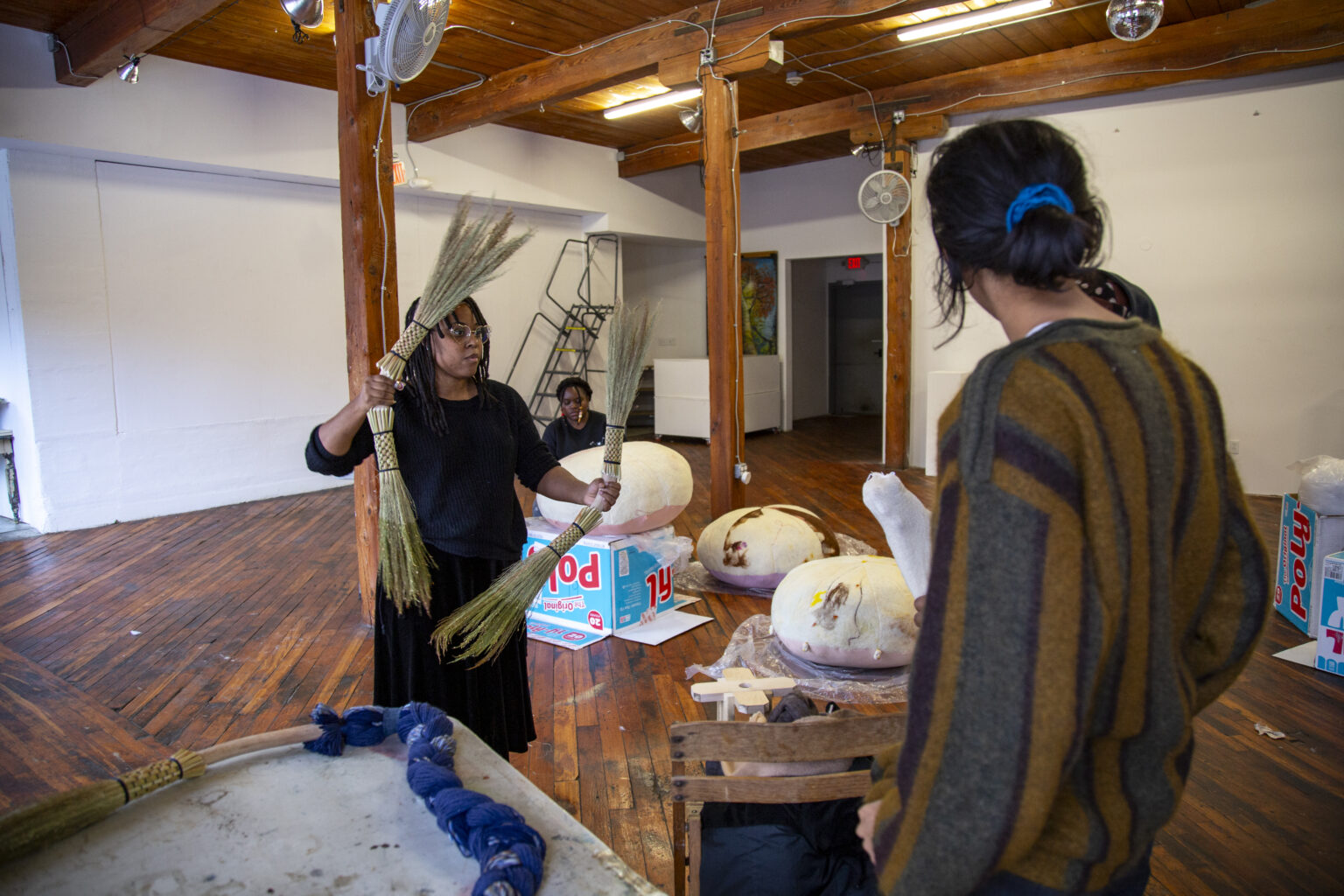
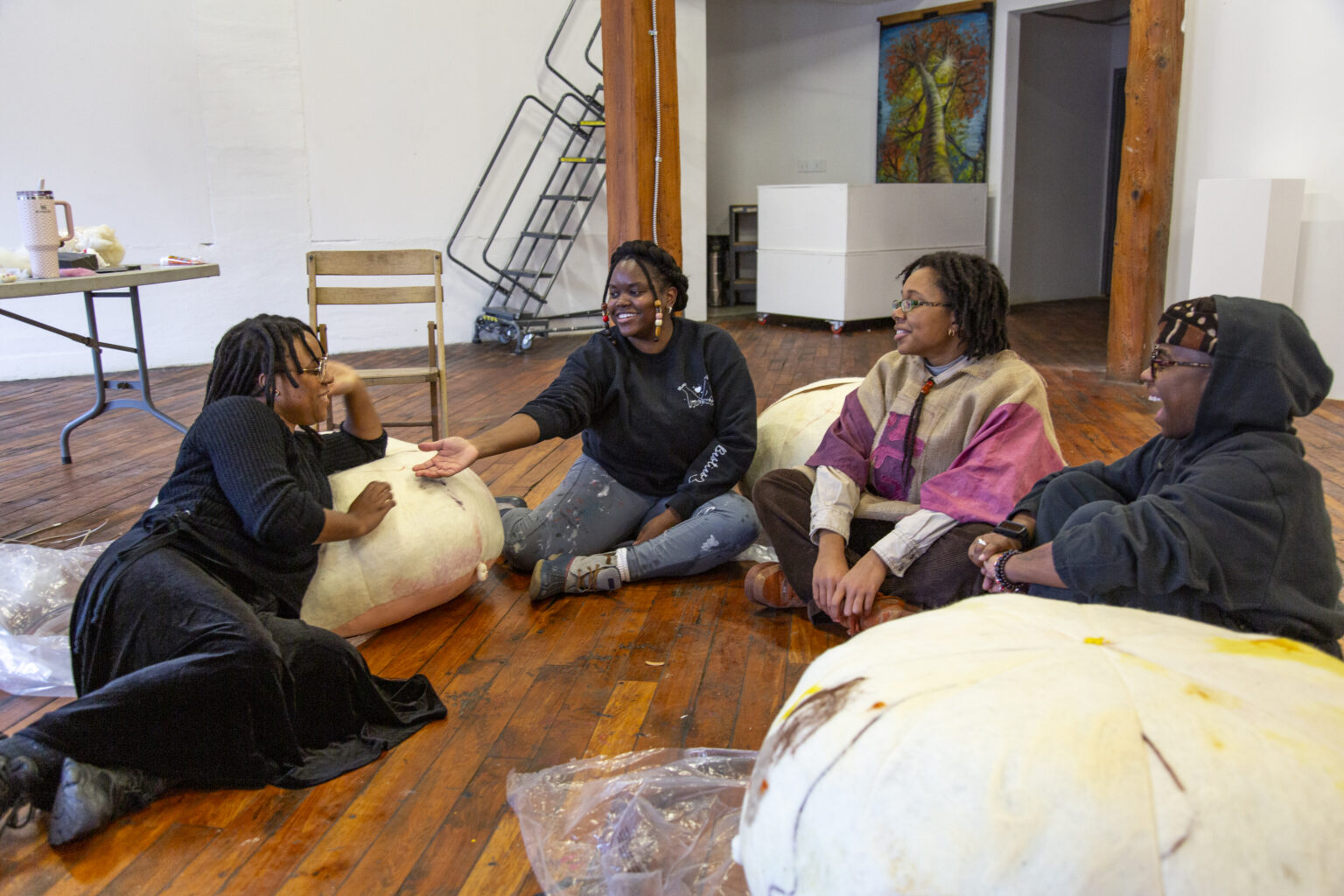
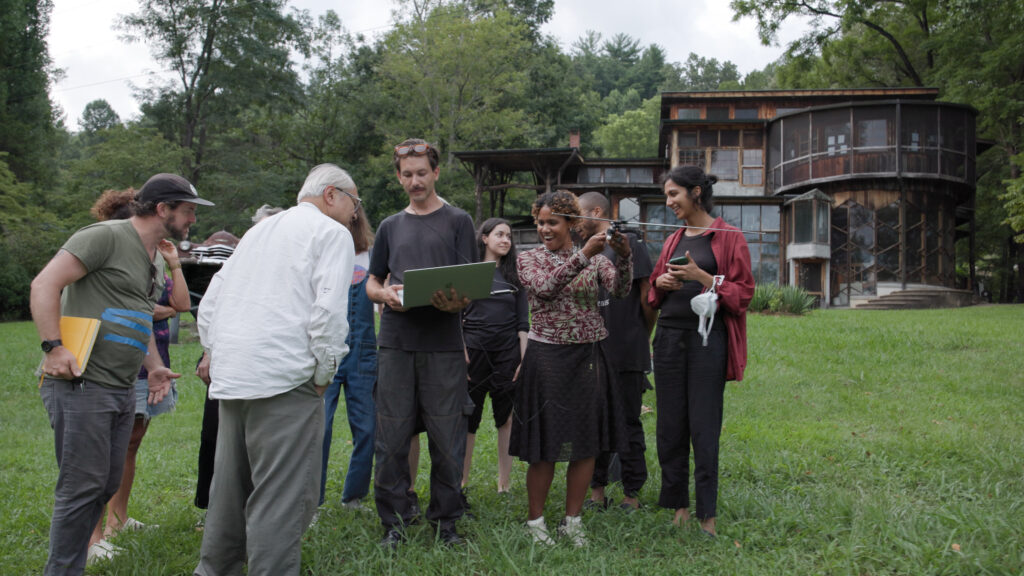
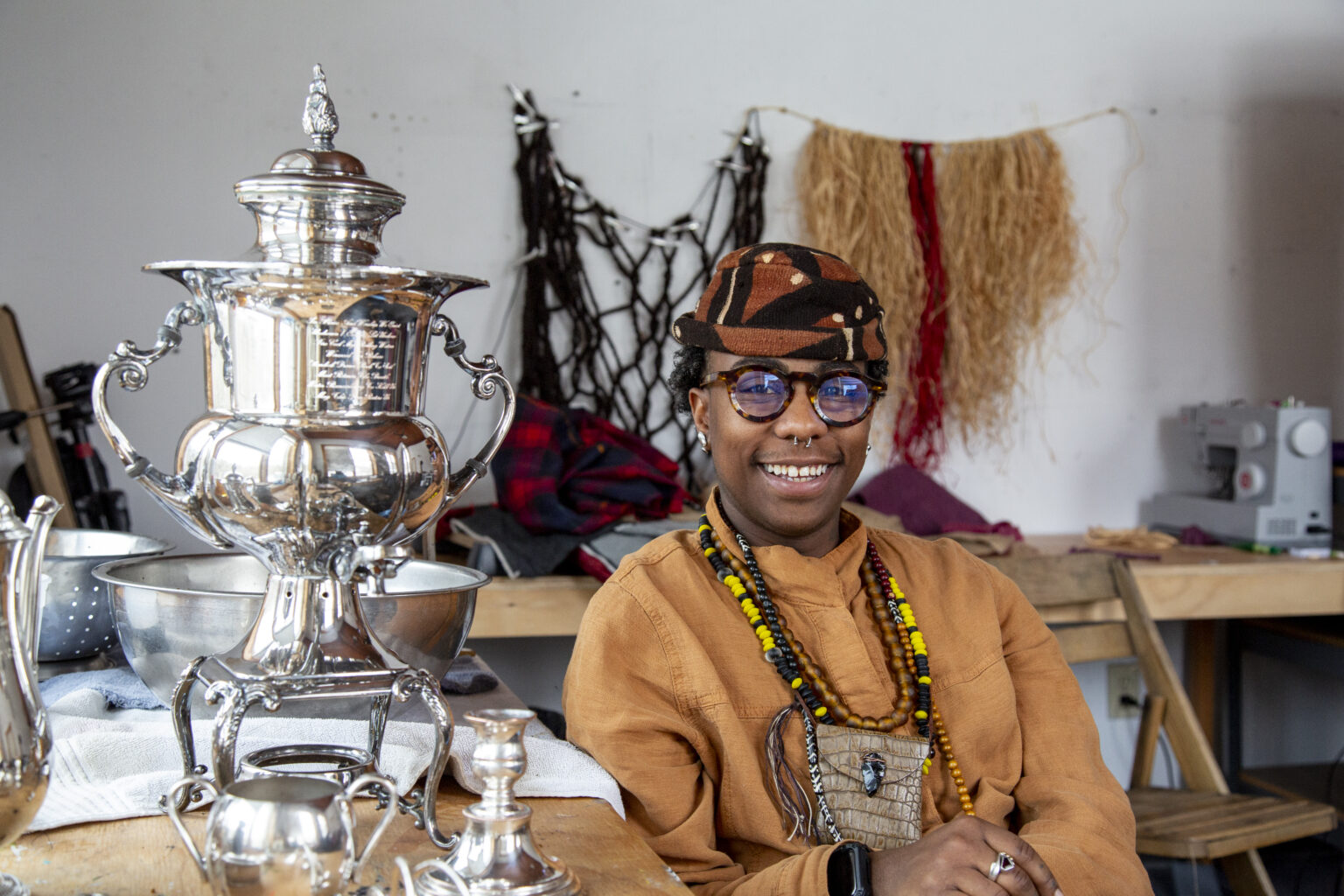
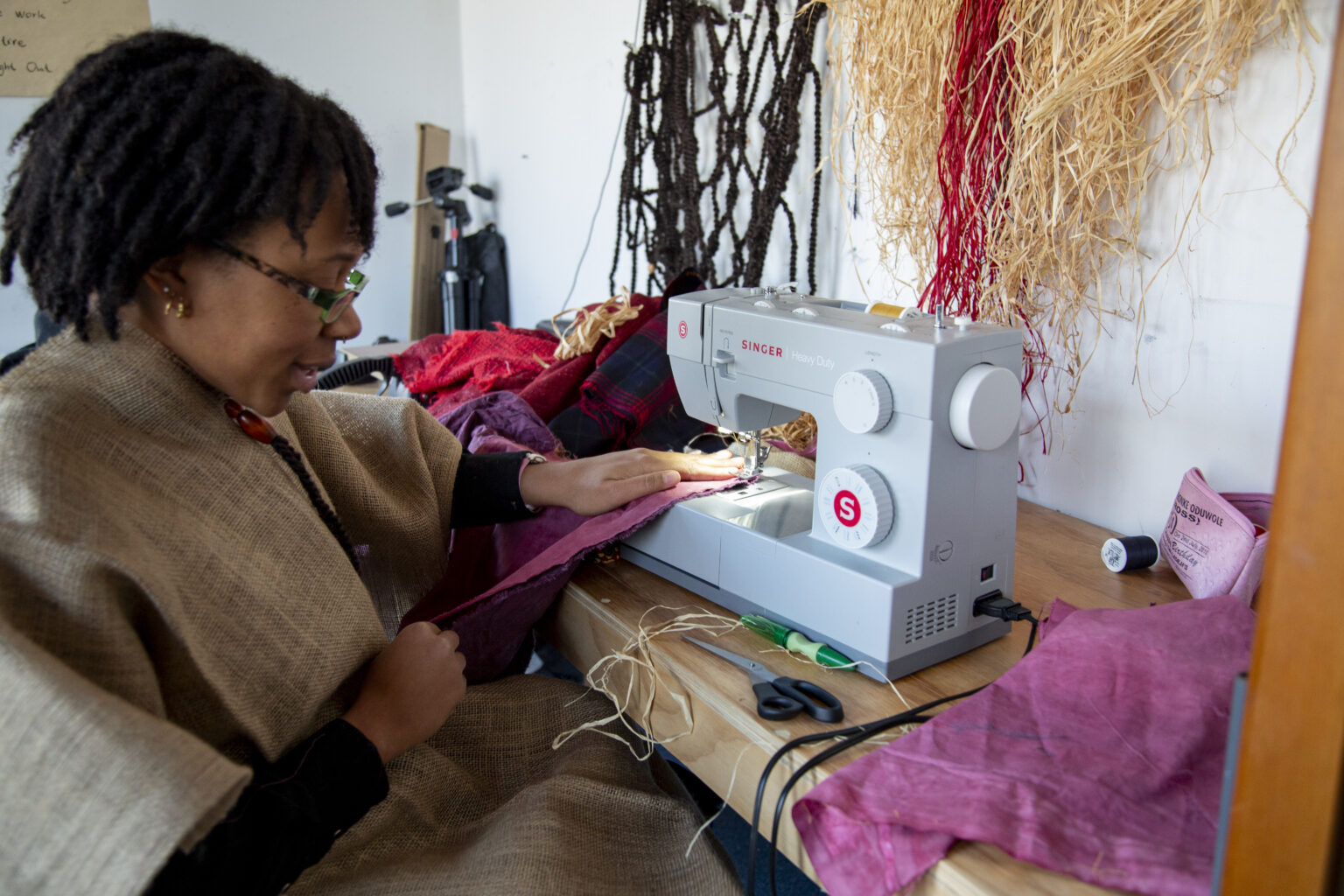
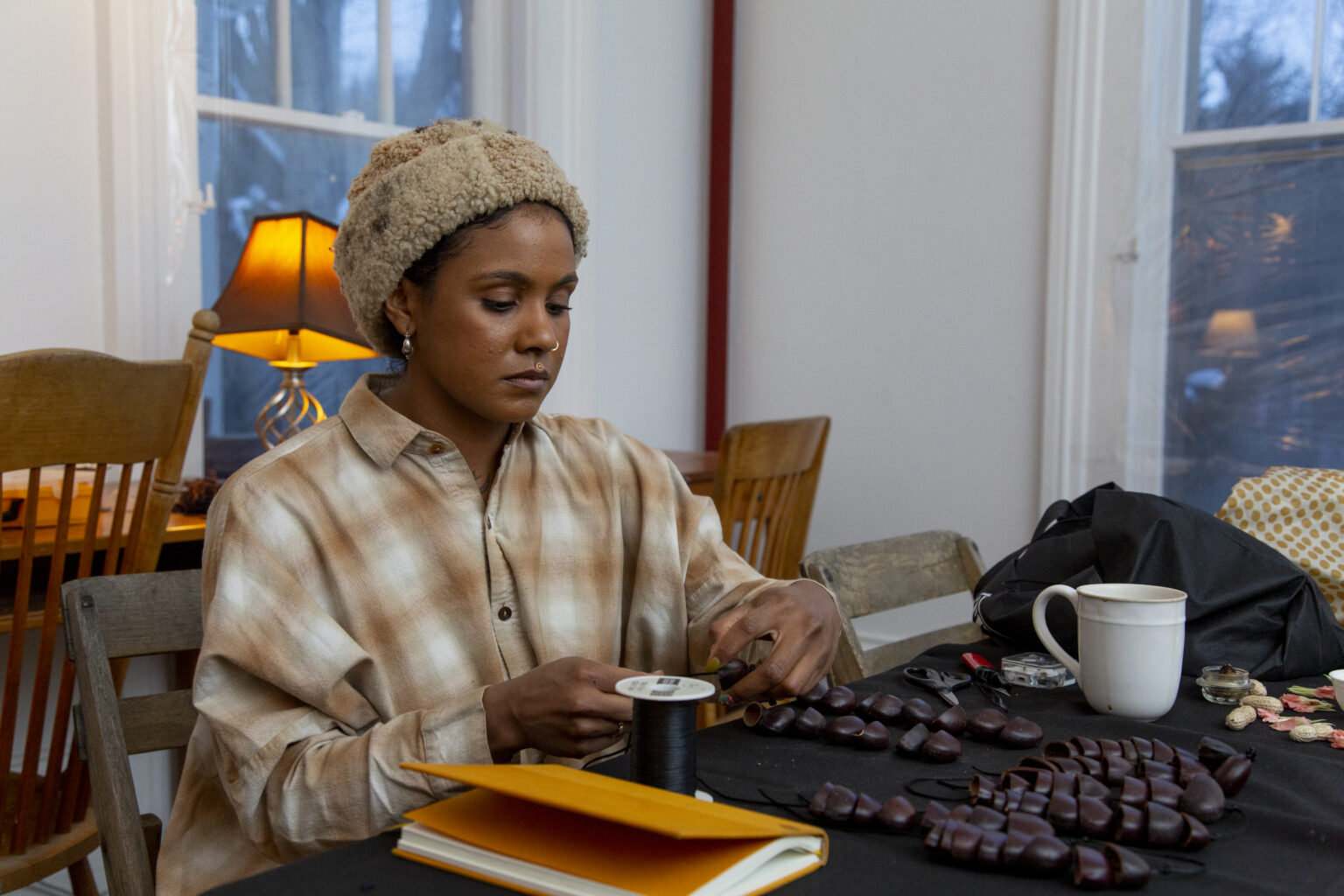
    The artists gather in craft, residency, and ritual at the Arts Letters & Numbers Averill, NY Campus. Photo by Billy Chen.

    i followed that impulse to make livingness. as a theologian and artist i think of sacraments as objects or practices that facilitate a material encounter with the divine. for me,  sacraments feel even more unmediated when the prayer of how they were made shares the same intent for their use, and when and how they are later received continues to honor that sacramental nature. i think of monastic communities making their own icons, candles and cloths, letting the repetition of carving, dipping and stitching become contemplative practice. 

    i am interested in sacramentalizing objects because black people know a thing or two about being thingified. we know what it means to be objectified, to be made of use, to be disposable. i am interested in the sanctification of matter as a way i care for black material culture and as a way we atone love for ourselves through companionship with “things.” 

    Tiya Miles writes in her essay, “How the Survivors of Slavery Used Material Objects to Preserve Intergenerational Wisdom,” 

    “Having been treated as possessions and deprived of ownership of themselves, their families, crops they nurtured, and objects they made and maintained, African American survivors of slavery recognized the world of things. They lived each day in haunted awareness of the thin boundary line between human and non-human, a thinness daily exposed and abused by slave societies…enslaved Blacks knew that people could be treated like things and things prized over people.”

    in an atmosphere where enslaved black folks’ homes, families, objects and very personhood were always at risk of death, forced migration or theft, it required a singular kind of spiritual stamina to remain in relationship with what could be taken away from you at a moment’s notice. while this ritualized intimacy with impermanence cultivated a theology of presence, it also traumatized the capacity for secure attachment: will they take my things from me? could my child or partner be taken away tomorrow? how will i be used against my will? 

    this relationship with impermanence and loss shaped a unique material culture. it is ms. shange’s “somebody almost run off with alla my stuff…/i want my own things, how i lived them. / and give me my memories, how i was when i was there…” 

    the stuff shange is talking about is her life force, her swag, her interiority. the stuff exceeds gratuity and is the essence of herself. it is this reclaiming of our stuff i’m after. in companionship with their own thingification, enslaved folks cultivated an ethic of care that offered tenderness to the stuff that mirrored their own dehumanization. what Miles references as a spiritual imaginary of matter, allowed enslaved black communities to consecrate everyday objects with power and presence that moved below the radar of their enslavers. this spiritual imaginary of matter or the apotropaic, the power of objects to protect and dispel haunting, is the clearing i am interested in offering through my life and craft. i was grateful to draw this imperative into how we developed the environment for homemade field of love. 

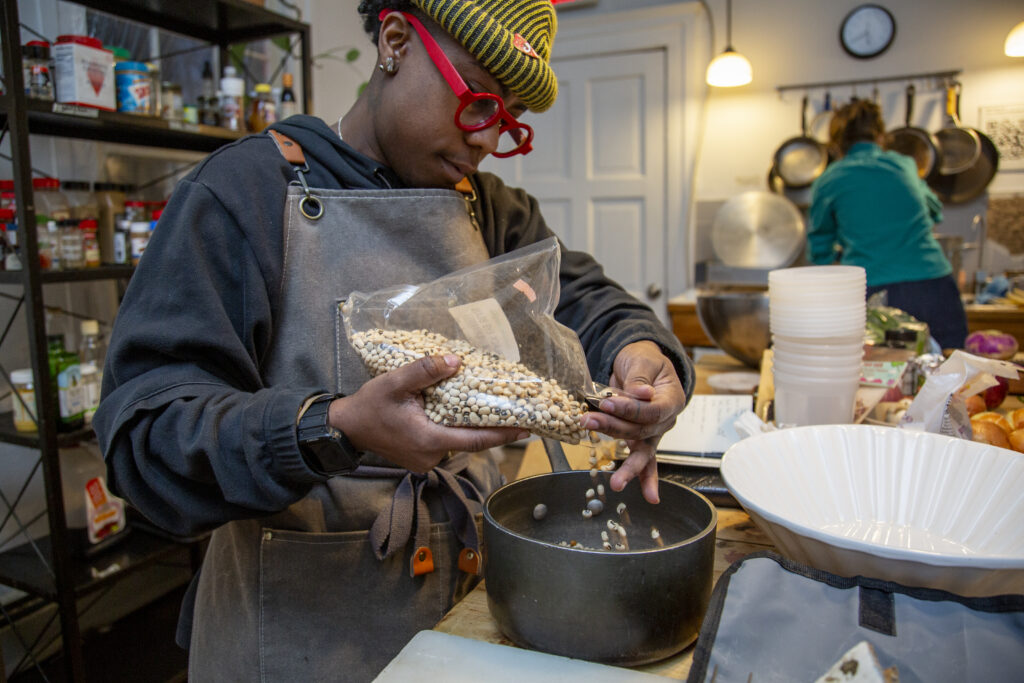
    Artist Spirit Adams leads a dinner inspired by the turnip and okra stew that June Jordan made for Mrs. Fannie Lou Hamer. Image Courtesy of Arts Letters & Numbers, Averill Park, NY. Photo by Billy Chen.

    listening to Fannie Lou Hamer sing, i pulled notes that spoke to me from June Jordan’s poem along with invitations from esperanza and the prompts from Sista Docta Alexis for the evening:

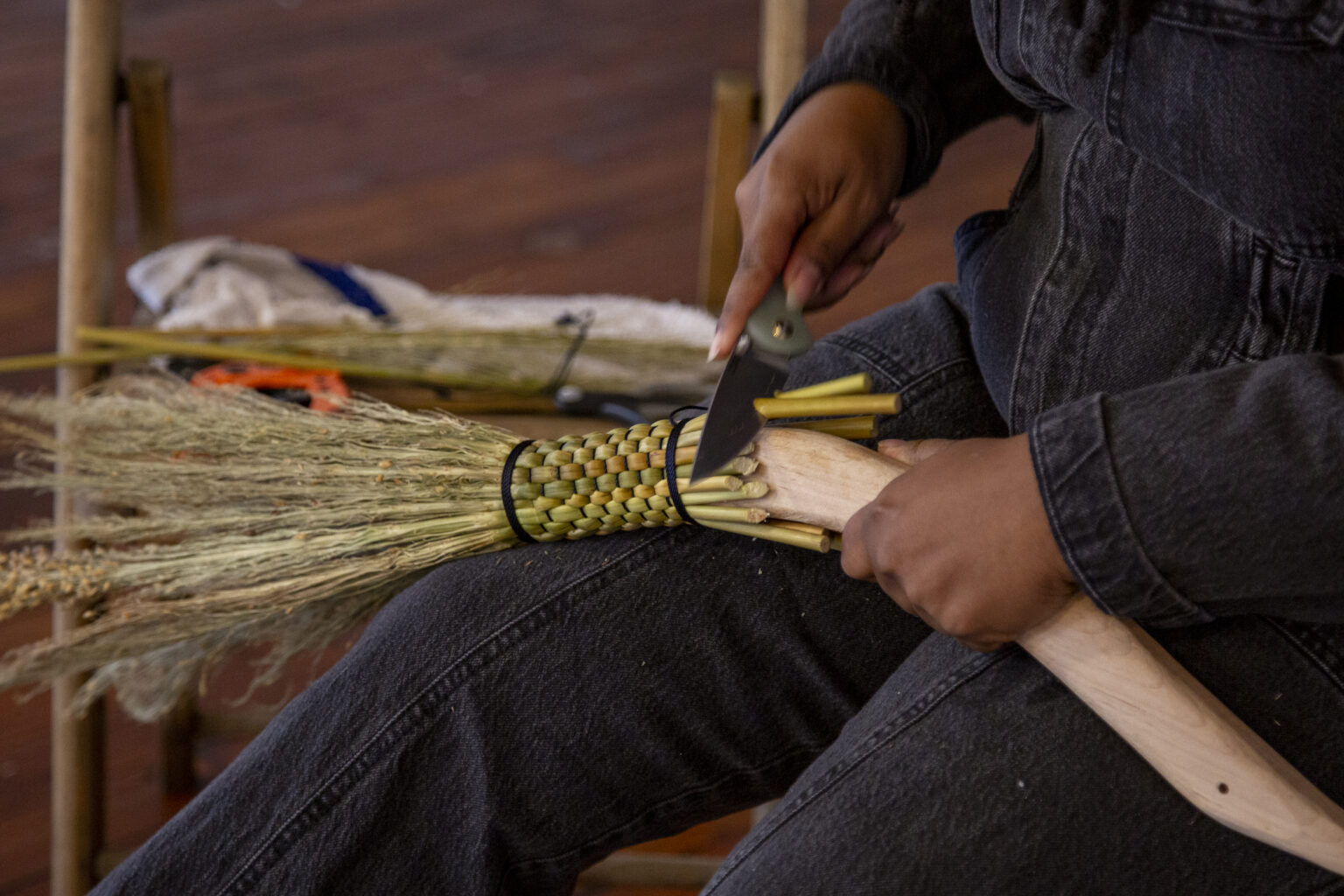
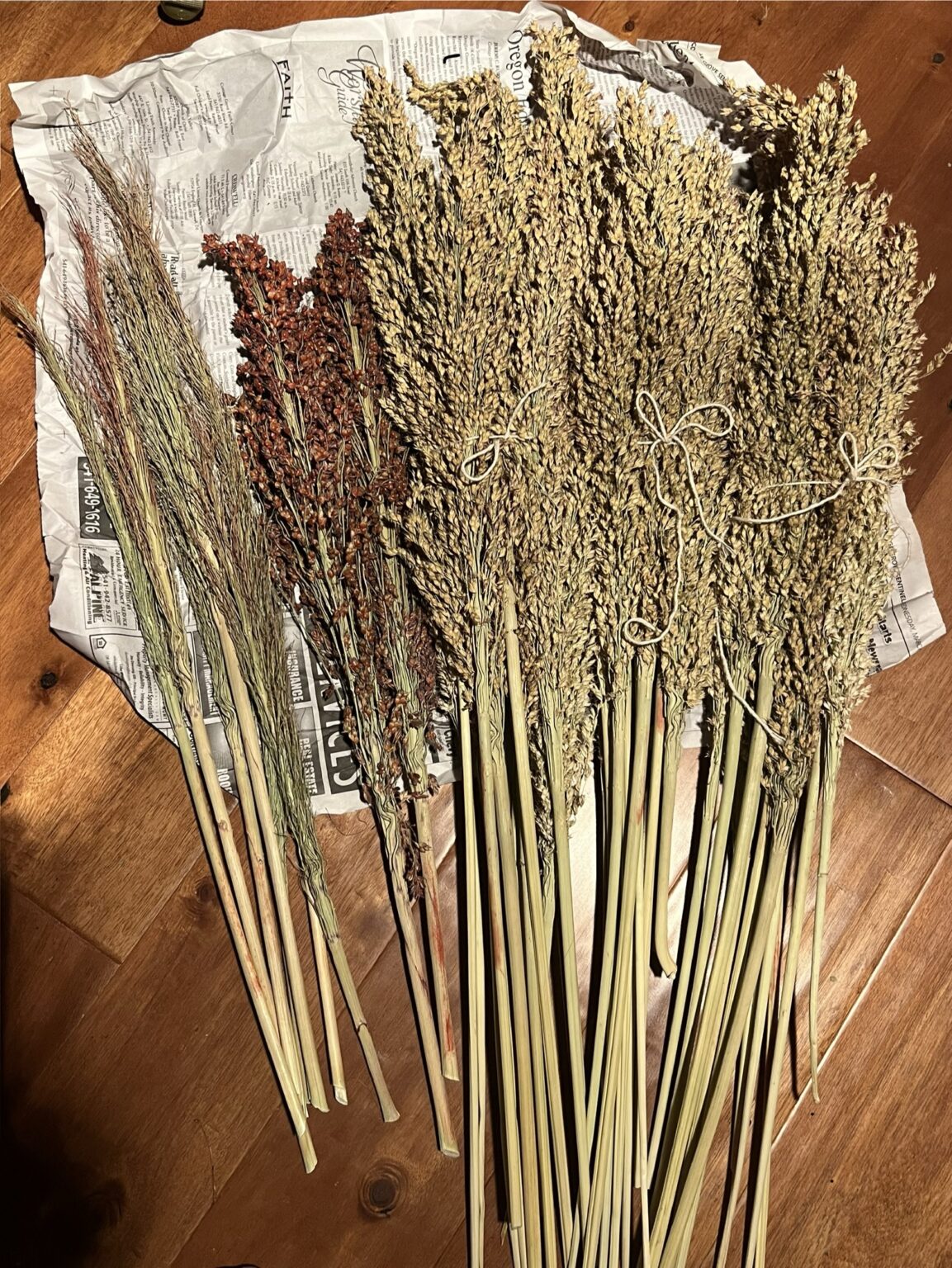
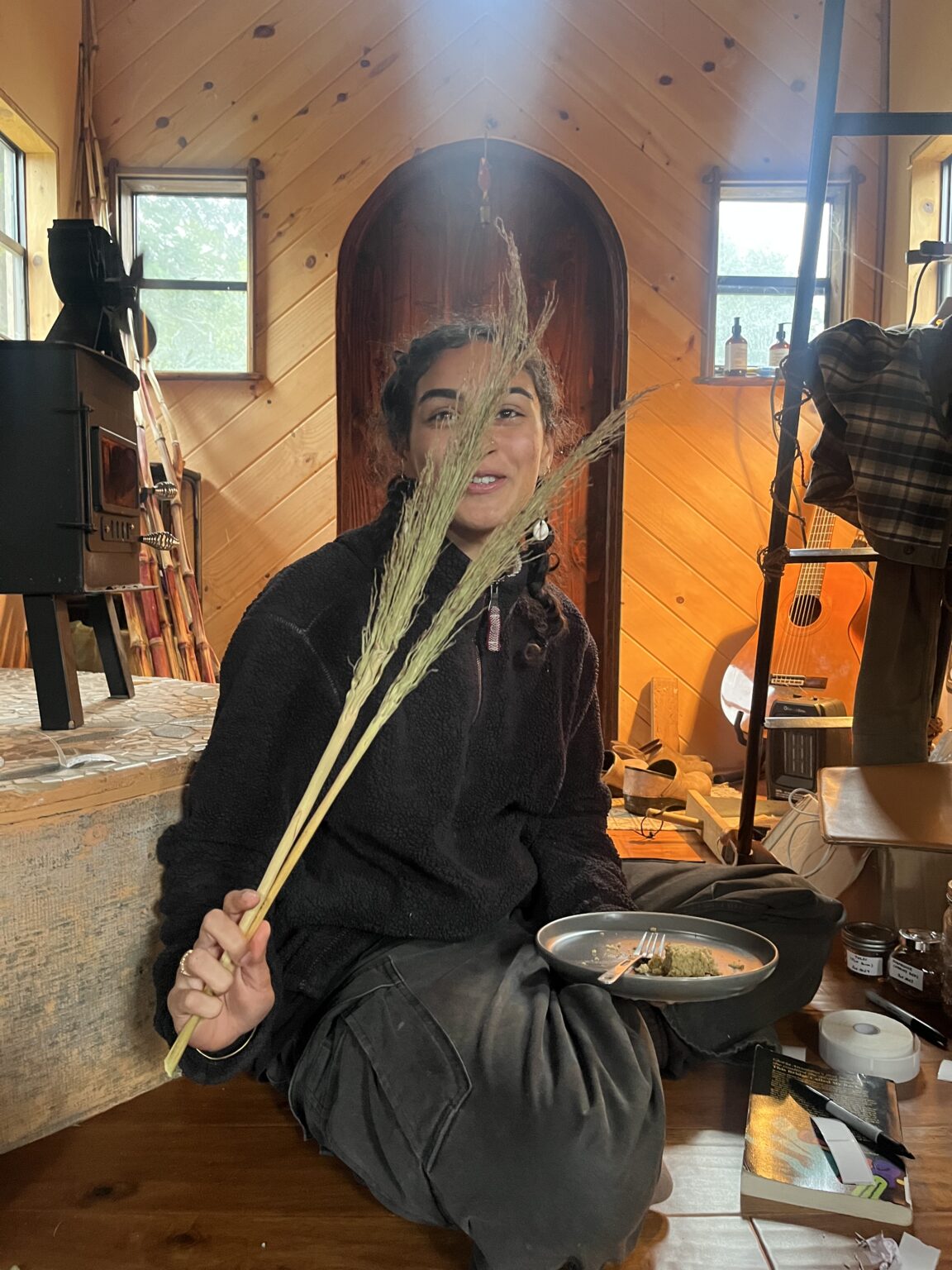
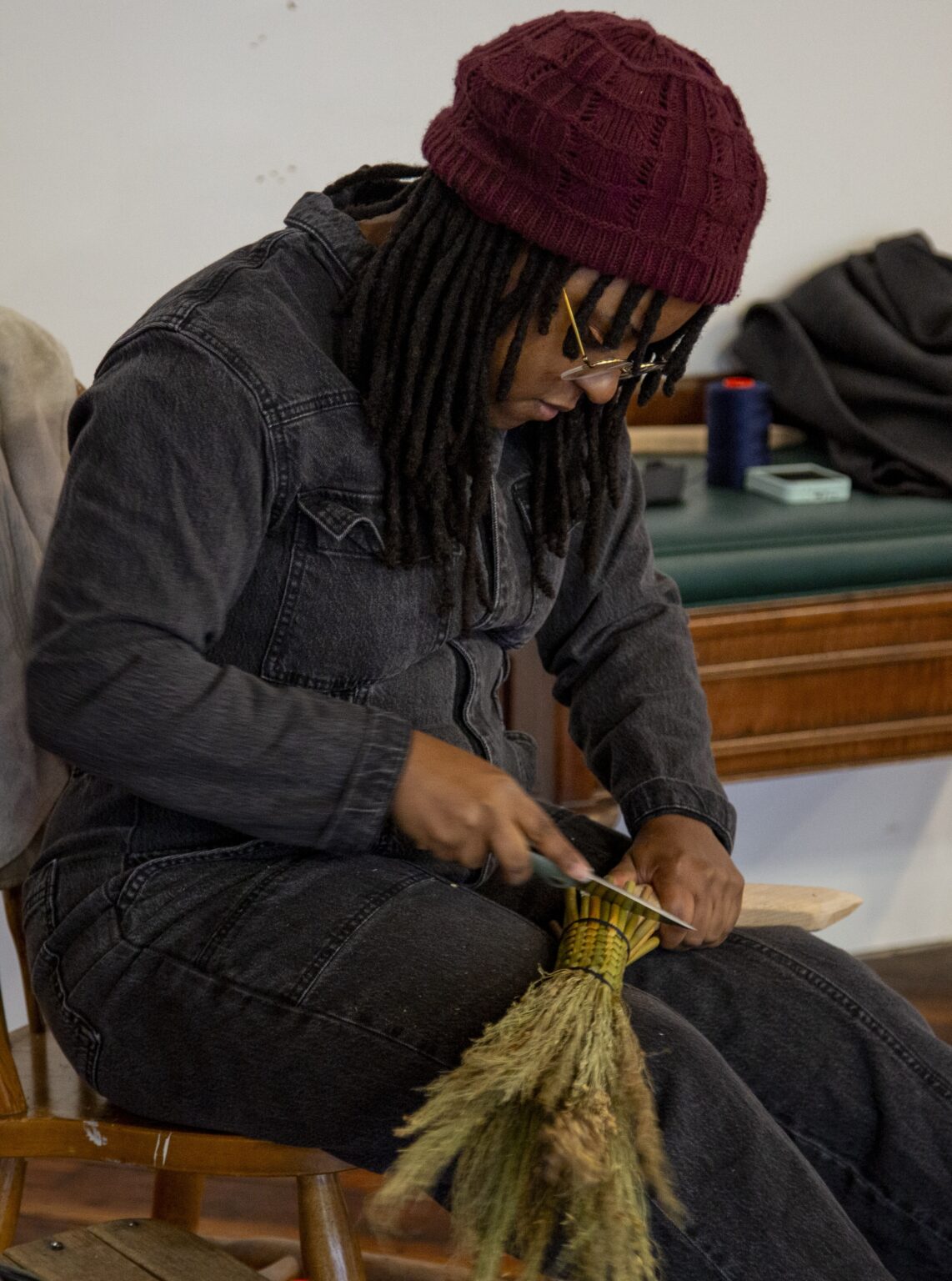
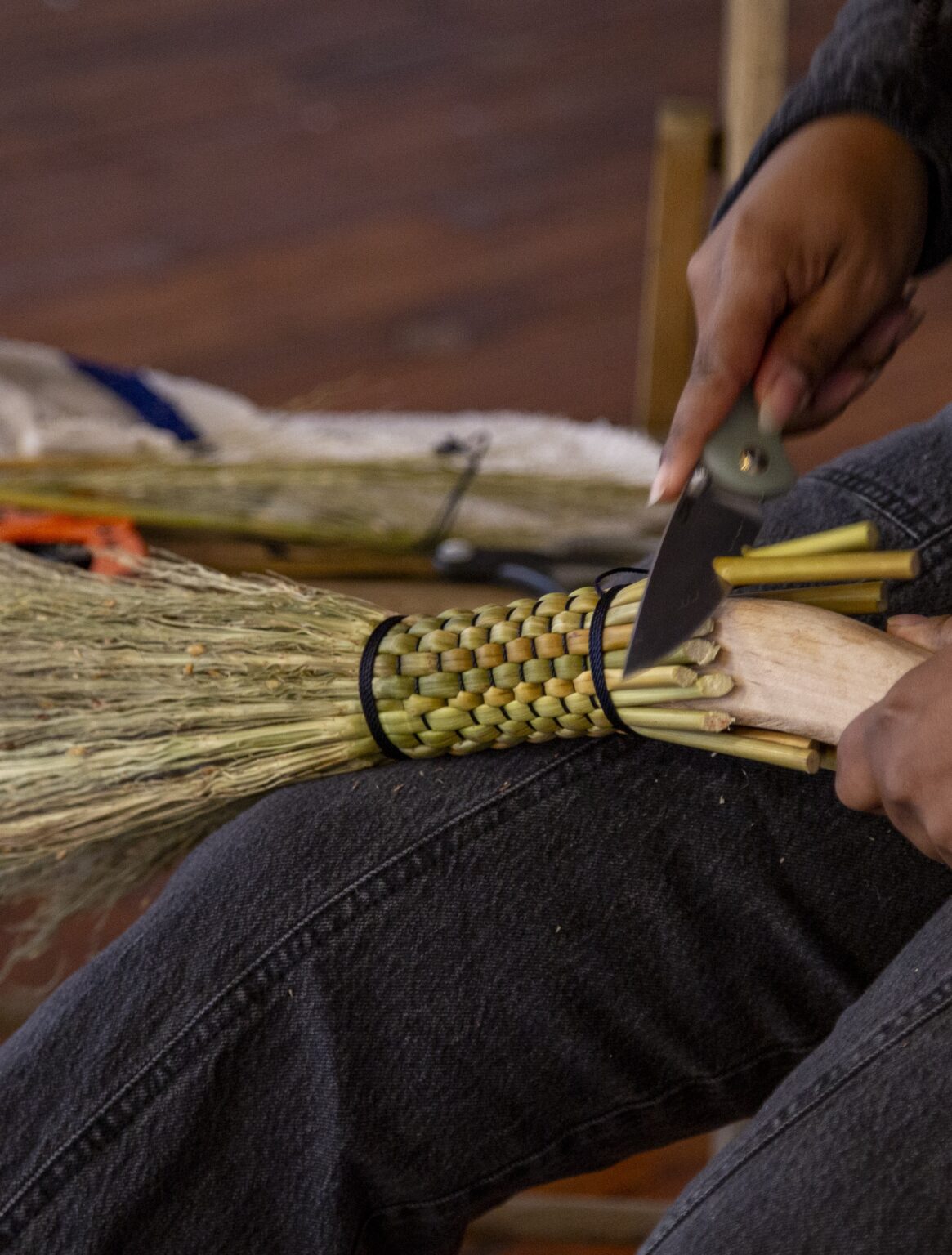
    how might we clean the air and maybe make our hands brooms? 

    how might we cool our internal waters with a libation? 

    how might we sit “lion spine relaxed” like ancestor June witnessed of ancestor Fannie despite the racial violence she was up against? 

    how might the fire at the center of this field of love be “one full Black lily luminescent?” 

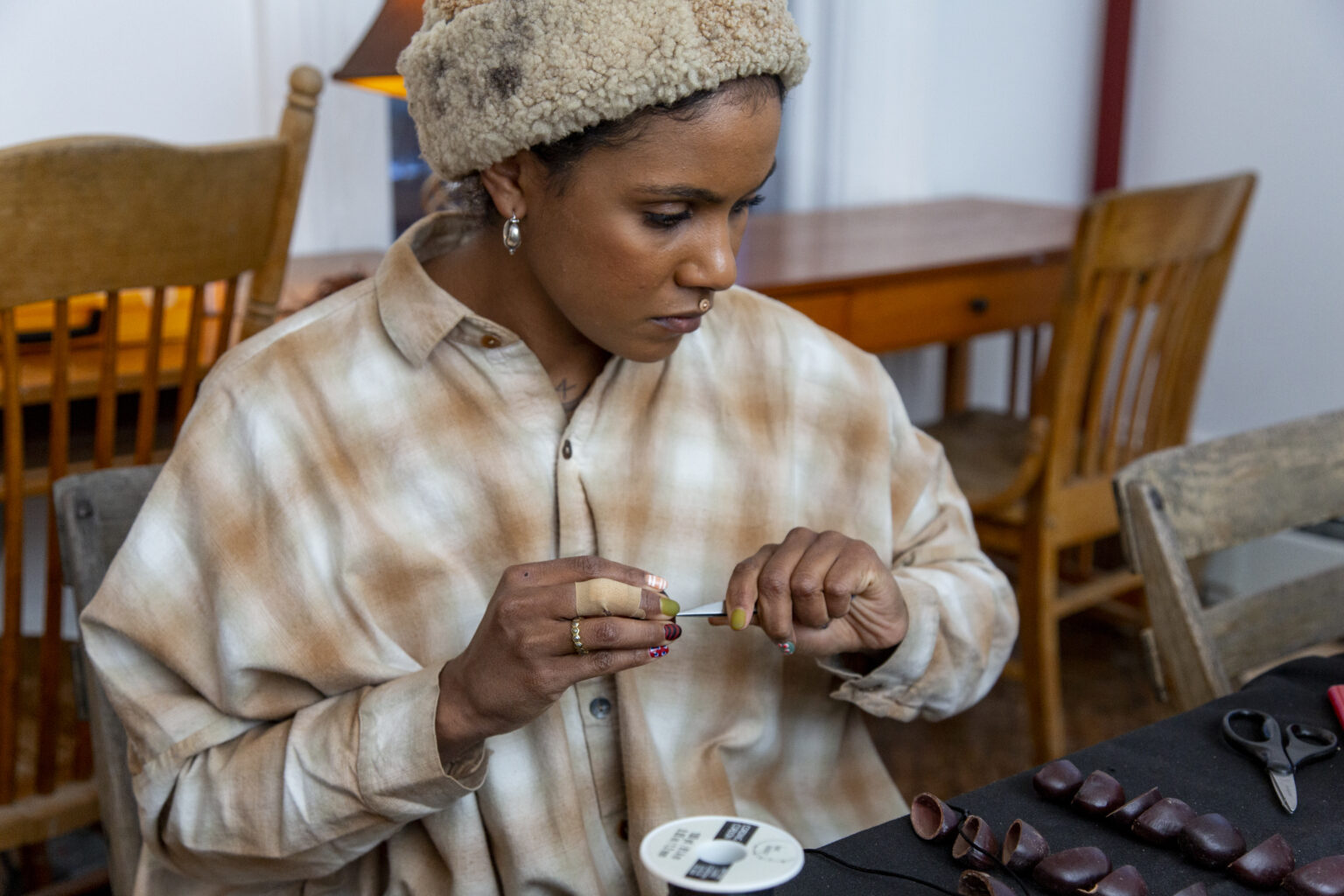
    if esperanza will invite participants to participate in “co-musicking” with percussive instruments, how might we make instruments from “bullets / turnips / okra” to craft “one solid gospel (sanctified), one gospel (peace).

    and what kind of environment would we need as artists to develop this homemade field of love?

    as i began thinking about co-conspirators to support me to produce this environment, i first turned to my collaborators Siyona Ravi and Amanda Wiles at SOURCE Studio, who i have been working with for the past year as their inaugural Research & Development Fellow

    we have been in an ongoing inquiry over the past year shaped by their art of gathering—a commitment to research that can only be asked and made through the curiosity of fellowship. they are interested in what cannot be made alone and how to trouble the impulse of a single artist to make a thing that longs instead for a circle, a spiral, or some other mutant shape that turns the offering on its head and opens it into something more beautiful than one singular being could imagine: Édouard Glissant’s consent to not be a single being. this for me is at the heart of SOURCE’s methodology and where my commitment to ecologizing my practice takes sweet refuge. 

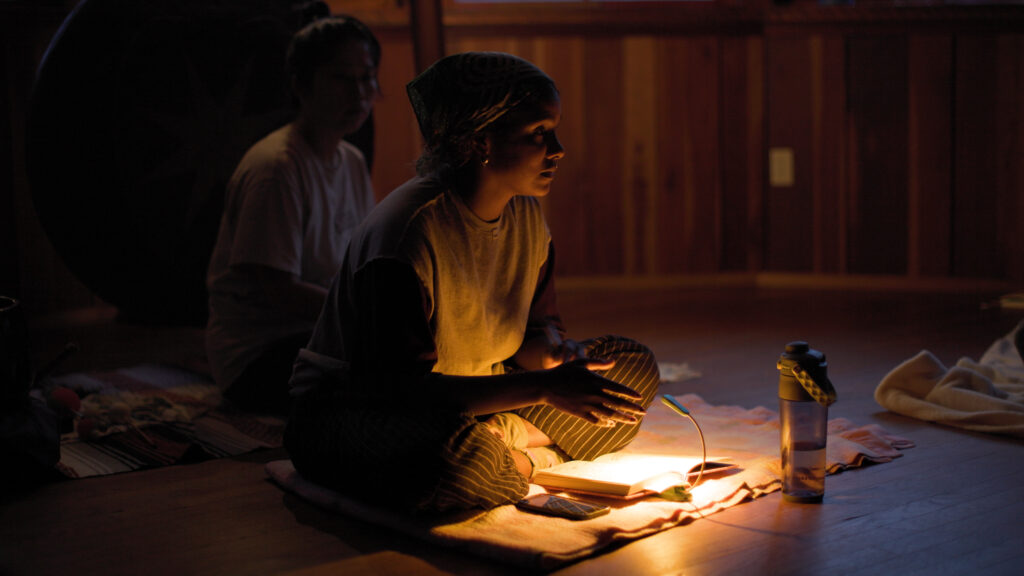
    brontë leads folks in a story sharing session during a SOURCE community gathering. Photo by Ben Premeaux

    SOURCE’s support of the development of my personal studio practice and their collaborations with Mel Chin cultivated a shared thread around frequency, reception, and the resanctification of craft. i was gifted the space to challenge artistic methodologies of output through collective questions on reception, which encouraged me to ask: what is the phenomenology of reception that transforms the spirit of extraction so prevalent in modern artmaking? what practices help us to receive and be present so that the artistic transmissions we offer come from unmediated encounters with our particular expression of divinity?

    when homemade field of love came across my lap toward the end of my fellowship, it felt like our questions together could be braided into the constellation of the project. i dared to pivot and invite SOURCE into collaboration to produce the residency with me, dedicating the merit of our year’s inquiry together toward the prayer for homemade field of love. i am so moved we were able to apply the fruit of our shared curiosities to the residency and concert. 

    when i first presented my vision for the concert to Siyona and Amanda, i had a clear design for the objects and was looking for fabricators to help materialize my vision (pero in a prayerful way! ha!). i am so grateful that Siyona challenged me to expand my curatorial methodology, to widen the circle of the dreamer, to move beyond familiar modes of art production that succumb to the ideator-to-fabricator pipeline. Siyona encouraged me to offer prompts that could take on a life of their own in the hands of collaborators, inviting me further into my curiosity about epicletic artmaking — epiclesis as in the set of conditions that courts the holy spirit to enter. 

    in challenging the prescriptions of top-down transmissions, where collaborators’ influence disappears into translating a single vision, this invitation allowed our process to kaleidoscope and become porous enough for epicletic activity to take place; where authentic collaboration could emerge between myself, the artists and the great mystery who lives at the mercy of entanglement, refuses divine singularity and prefers to be made up of at least three to make things holy and make some shit shake!

    as i set my heart on the prayer for the evening it became clear i wanted to host a ritual craft residency with invited artists to make the objects in prayer together to take on the flesh of June Jordan’s poem.

    Photo credit: Ben Premeaux.

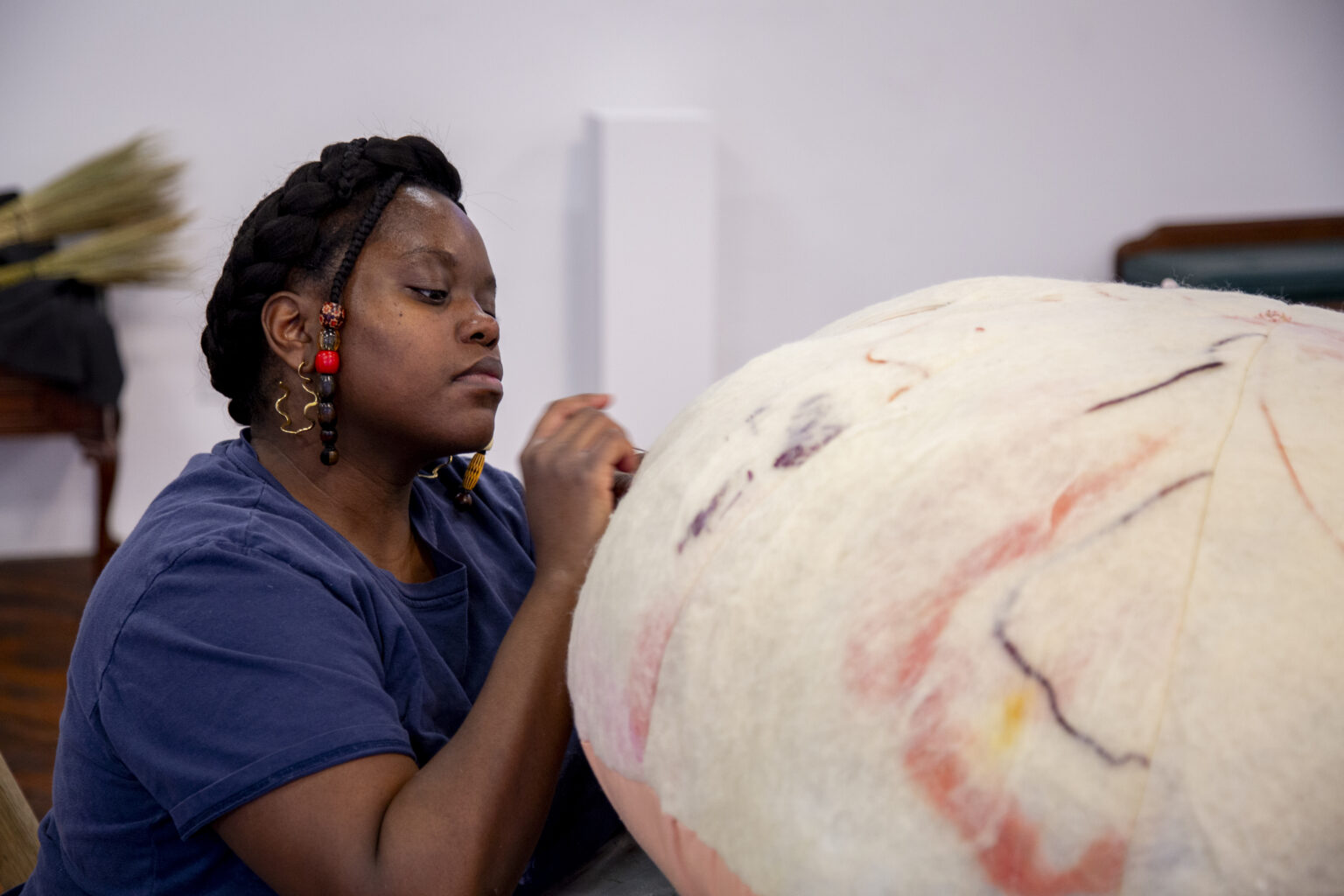
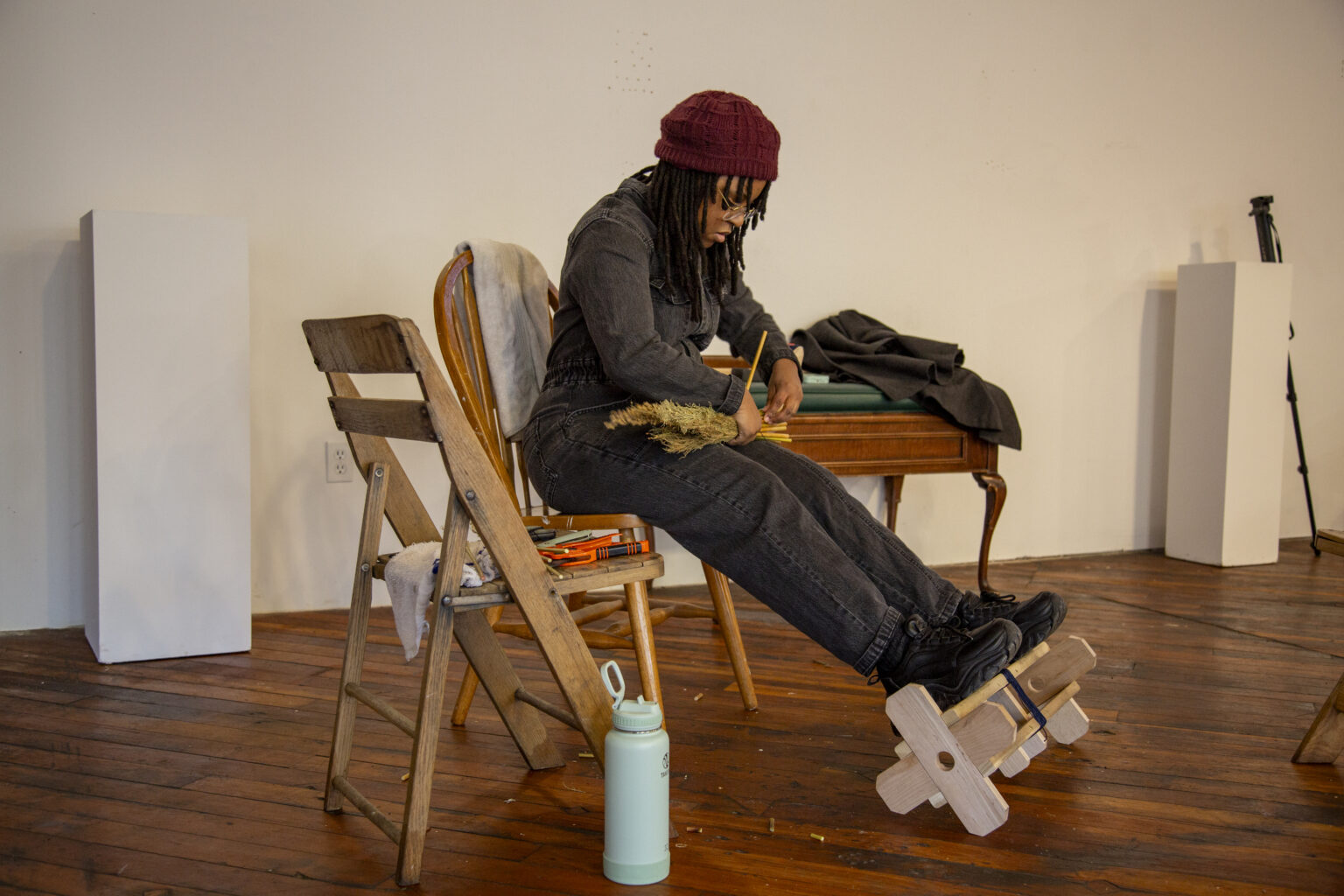
    once SOURCE said they were in i petitioned that great mystery to call me to the artists who might bring these sacraments into form, and i am so grateful for each enthusiastic yes from Karina Sharif, Nastassja Swift, Jasmine Best, Spirit Adams, and Cici Osias for going above and beyond with this invitation! 

    upon each artist’s yes, i invited them to discern their sacrament through a ritual practice. 

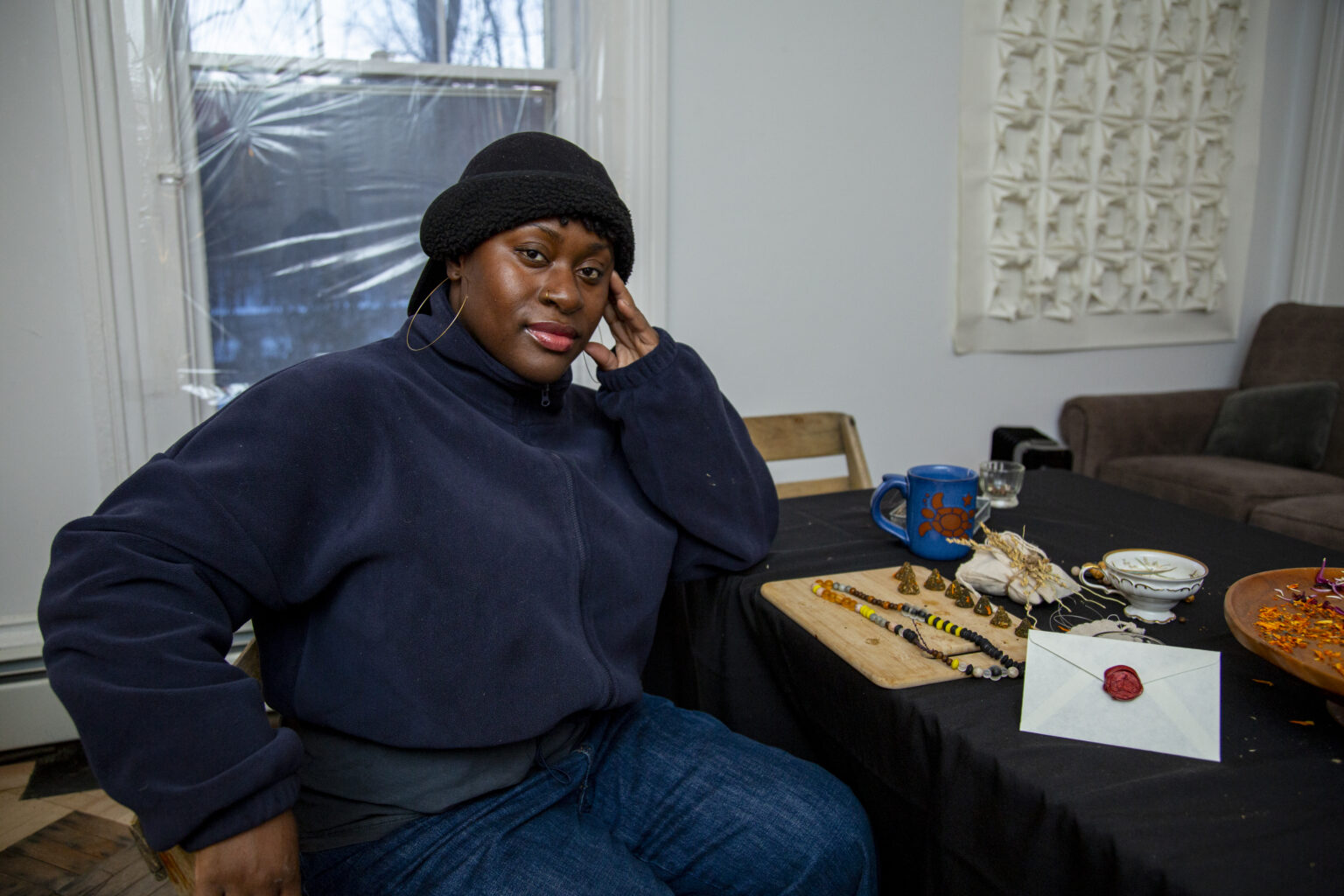
    each artist was invited to light a candle or some smudge, set out some water as a libation, lay down, and listen to a personalized attached audio file. after listening to the file, the invitation was to get on their first call with me to share the story, images, visualizations and textures that emerged for them during their practice that they felt called to share without needing to have a clear vision for their sacrament yet. 

    each recording, began with listening to esperanza spalding’s Formwela 1  from her Songwrights Apothecary Lab album. while they listened to the song, i encouraged them to: “sink deeper and deeper into the ground, to imagine the ground holding you up, then trillions of life forms beneath the soil, all the way to the magma, all the way to the other side of the earth, all the way to the stars that want to listen to you from that place Dr. Koko Selassie calls “below where you cry from.”

    after they emerged from that listening, i invited them into a practice call xing jai meaning fasting the mind from the Daoist tradition that I received from my teacher and friend Lindsey Wei,a Chinese American Wudang Kungfu Practitioner who has a practice called Wudang White Horse Academy. the practice is to imagine a flame at the center of your belly, it could be a candle or just a still flame. as you inhale the flame increases and as you exhale the flame dims but doesn’t go out. the invitation is that when thoughts arise you can let the mind fast and continue to come back to the breath and the flame. i invited them to try it with me and then to continue the meditation as i recited June Jordan’s 1977: Poem for Mrs. Fannie Lou Hammer. 

    emerging from the poem, i gave each of them a different prompt: 

    after the artists, heard the prompt for their sacrament, i invited them to listen to three spirituals sung by Fannie Lou Hamer: “Oh Lord, You Know Just How I Feel,” “Walk With Me” and “Keep Your Lamps Trimmed and Burning” to guide them into a divination for what wanted to emerge for their offering. they then brought those oracular notes of what came through while listening to ancestor Fannie’s music to their first call with me.

    we closed chanting one full black lily luminescent in a homemade field of love. following Alexis Pauline Gumbs’ black feminist breathing chorus practice and the artists were then invited to offer their libation to the earth and close their candle. 

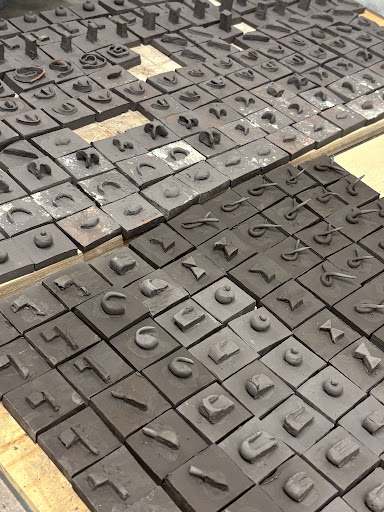
    i then met with each artist in one-on-one calls to connect and to listen for what had begun to emerge in their time divining their sacrament. it was such a potent way to begin a relationship with each collaborator and to start our connection from a place of shared practice, altar and prayer. during this time, karina also developed a new piece using an ideogram they had been working with as a fugitive black language, crafting June Jordan’s poem into a totem sculpture! 

    following the spirit of jazz, i invited each artist to hold the crafting process as something responsive to the movement of the spirit and their own inclination toward improvisation. i asked: what do you know now about how your sacrament longs to take form? what is the invocation for your offering? the invitation was to hold a prayer for the sacrament more than being committed to the form that prayer took.

    we let those prayers stir in us the month leading up to the residency as the days darkened in the company of winter, that loving companion to mystery. winter’s stillness teaches a kind of faithfulness to what cannot yet be seen: how beneath the apparent death, life surges underground pulsing and gestating. ~ 

    Continue reading brontë’s reflection in Part Two, on the culminating evening at Carnegie Hall!

    And learn more about brontë’s R&D Fellowship with SOURCE here!

    on crafting a homemade field of love (part 2)

    on crafting a homemade field of love (part two) a reflection and meditation by brontë velez the artists, SOURCE Studio and i gathered in the blustery winter snow the week ahead of the concert in residency at Arts Letters & Numbers in Averill Park, New York to be in ritual
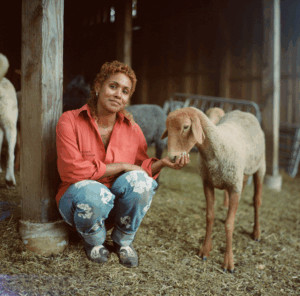
    brontë velez

    2025 – 2026 RESEARCH & DEVELOPMENT FELLOW Meet brontë (they/them): is a black-boricua transdisciplinary ritual artist, shepherd, minister and cultural worker. their theological praxis is an intergenerational prayer to resanctify labor with land through rebuking the hauntings slavery has had on our precious relations with earth-rooted ritual and craft. brontë’s ministry is committed to re-ecologizing the roots of pastoral care — as shepherds who paid attention to the earth, followed the wisdom of their rhythms and patterns and through that devotional awareness received prophetic instructions for liberation.  the prayer of brontë’s life is to support safe and hilarious bedside care through climate collapse. they don’t know if we will get to the “other side” but are interested

    Read More »

    Research & Development Fellowship

    RESEARCH & DEVELOPMENT FELLOWSHIP S.O.U.R.C.E. Studio’s Research & Development Fellowship supports artists in developing a bold and poetic project that catalyzes opportunities for connection and liberation. Over the course of a year, we closely with the artist Fellow, providing thought partnership, administrative support, and a $25,000 grant to deepen and build a program

    Read More »