Developed by Mel Chin in collaboration with SOURCE Studio as part of Why We Gather
|| Cooking up a climate of nurturing and connection in a divided time
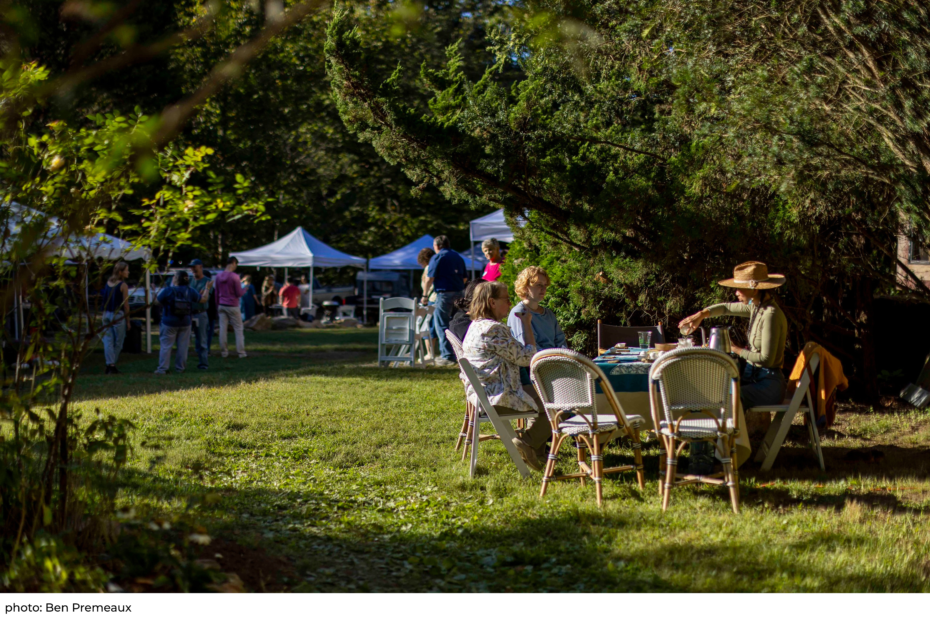
On Saturday, September 26th, 2026, Mel Chin and Helen Nagge, in collaboration with SOURCE Studio, opened up Mel’s studio to the local community for an afternoon of shared food, storytelling, and neighborly exchange.
The gathering, Cradle, landed on the second anniversary of Hurricane Helene, meaningfully extending SOURCE’s aid work in Western North Carolina and deepening our own practice of question-asking, storytelling, and bringing folks together.
Before becoming Mel’s studio, the building served Yancey County for decades as Sunday School, craft center, community center, and, eventually, a maternity hospital in the 1950s and 1960s. For the gathering, we invited those who were born in the old hospital to return, reconnect, and share their memories of growing up in the area.
With deep support from Communal Pen, participants shared stories and memories sparked from being there, which will be part of a living archive. They responded to prompts about what it was like to grow up in the area, the stories they were told about their birth, the kindest food gesture they’d ever experienced, the art or craft traditions they grew up with, and how it felt to return.
The menu brought together Puerto Rican Barbecue from Jeremy at Blue Ridge Boricua Barbacu, Chinese cooking from Ping at Little Tokyo, and Egyptian food from Muhammed at Egyptian Taste. Shunyu Huang from Wild Flavors Tea helped us wind down the evening with a traditional Chinese tea tasting.
Throughout the day, folks were invited into Mel’s working studio to encounter artworks, ephemera, and to experience his creative process. To close the event, community members were invited to ideate a new artwork with Mel, which will continue to take shape through ongoing dialogue with storytellers.
The project reimagines the cradle as a place where ideas, relationships, and communities are brought into being. Through shared dialogue, storytelling, artistic collaboration, and culinary exchange Cradle affirms that communities are continually renewed by the people who gather within them. By returning to a place of beginnings, we invited participants to reflect not only on where they come from but on what they might start together.
We are grateful for studio friends and neighbors, Brandy and June Honeycutt for their support in organizing, and to the many many folks at Mel Chin Studio who helped bring it all together.
Why We Gather is a yearlong series of gatherings in rural communities where artists have deep roots and close ties. Initiated by twelve artists, gatherings occur monthly from August 2026 through August 2027, forming a distributed portrait of the United States in its 250th year. Across these communities, artists respond through hosting and gifting, using meals, shared labor, and collective making as artistic media. Each gathering is grounded in local foodways, cultural traditions, and gestures of gratitude. Seen together, they reflect on self-evident truths and seed a vision of presence, care, and shared responsibility. Learn more
June Honeycutt, My mother gave birth to 14 children
My mother gave birth to 14 children. I was the ninth child and the first one born in a hospital. I was born here at Higgins Clinic, February 12, 1955, at 1230 a.m. I weighed nine pounds. Poor mom, and I was delivered by Dr. Ost. Mom had five more babies at Higgins Clinic: Johnny in 1957, Carol in 1960, Kim in 1962, Ramona in 1964, and Jeff in 1966.
I don’t remember hearing stories of the girls or my birth except when Sister Carol was born. Shortly after Carol was born, Mom had to be hospitalized for ulcers. I think Mom had breastfed all of her babies, with Mom in the hospital and Carol an infant who needed nourishment, dad bought a Jersey cow, who we named Old Bren, who had to be milked twice a day and who became a family pet.
On January 15, 1966, we had a three-foot snow, and Mom went into labor with her last child. My father, or one of the older brothers, walked to Bee Log to ask Arnie Pate if he could get Mom out of the holler and up to Higgins Clinic. In a little while, here came Arnie Pate up the holler, pushing snow with his jeep.
In a little while, Dad, Mom, and Sister Patsy loaded up with Arnie, and they took off slipping and sliding to Higgins Clinic. There were eight of us left at the house: two teenage brothers, Eddie and Jack, and six of us girls: Shelby, me, Johnny, Carol, Kim, and Ramona. Late in the evening, Jack and Eddie said they were going down to the neighbors to call the clinic and check on Mom.
They were gone a long time. It was really dark and still snowing. We heard noises outside. Something or someone was scratching and knocking on the house. I looked in the living room and saw snowy hands on the window. In the sensible part of my brain, I knew it was Jack and Eddie, but I was still scared. The other girls weren’t taking any chances. All five of them dived under Mom’s bed.
A little while later, after they had their fun scaring us, Jack and Eddie came inside and told us we had a little brother. We were over the moon. We had a house full of girls, and now we had a little brother. The next day, here came Arnie Pate pushing snow with his jeep and bringing Sister Patsy, Dad, Mom, and our little brother.
They had named him Jeffrey Allen Lewis. He immediately became Jeff to us. A few weeks later, Jeff’s birth certificate came in the mail. He was not Jeff at all. His official name was Kevin Allen Lewis. No one could get Kevin out when we referred to him. So all of his life, to us and everyone who knew him, he was Jeff, except to Arnie Pate, who called him Snowball.
Don Mitchell, One of the best things to show love for your community was to take care of the horses and the animals while the people was going through this time of grief
One thing I remember, and I share this quite a bit, if there’s a tragedy or a death in a family, and like I said earlier, you know, everybody had a milk cow, everybody had the horses and hogs and stuff to feed. And one of the best things to show hospitality and love for your community was you would go and volunteer, milk the cows, feed the hogs, take care of the horses and the animals while the people was going through this time of grief.
Because up and down this river they’ve been—well mostly, you know, like young people starting to drive would have a bad accident. They’ve been just too many to number, like two twin brothers at one time, you know, and it was, you know, a tragic death and a sudden death, and to do to take food, and the whole community would come together in doing this. You know, I mean, you took food, and it just wasn’t for one day. You done it for, you know, as long as needed, and that was one of the things I can remember.
You know, that the community would come together. If it was like a big storm, disaster, or a hailstorm comes through and took somebody’s tobacco crop out, you know the community would pitch in and they would do what you call a “love offering” and go around the community. You want to give some to so and so.
Yeah, faith was a big part of our community. I mean, all these little churches, and we wasn’t so big into the denomination. Something we’d all gather together, regardless. You know, like this was Free Will Baptist over here, which is still on up the road down. We was in a, you know, just like a hole in this church, and that this, you know, didn’t make no difference what the name was on the church. They all come together, and they all served the same God, had the same faith, basically the same belief. It was just, you know, the church got named whether it was Missionary Baptist or Southern Baptist, God-fearing people.
But like my wife said, there was one time my dad had an accident working on the mule’s harness and cutting a piece of leather, and a knife slipped and stuck the mule in its main artery that goes up through its neck, and the mule was bleeding to death. And they had me to run home to get some soot out of the chimney to pack in that thing. I told my mom what was happening, and there’s some verse of scripture in the Bible that she read, and we prayed for that mule. And when I got back to the field, the wound had closed up. My dad and the guy that was with him, standing there as white as sheets, and they was trying to figure out what had happened. Said that mule was going to be dead another two minutes. I said, “Mommy prayed.” And they said, “Well, the mule was healed, and just a story, like you know.”
Chrissy Adkins, Right after the flood I stared at the mouth of the creek
Right after the flood, I stared at the mouth of the creek, we just had went down there to look at the river and we were able to just kept going down there every day and sit. People started bringing supplies and stuff. So, I kind of sat down there. We were just in awe. We just couldn’t. I mean, it was unbelievable. Just you know, it was hard to imagine that water being up that high, and where we were standing, we would have been covered with the flood. So it was hard. A lot of people had a hard time picturing and even looking at it, it’s hard to believe it still. It just-it’s just hard.
It looks like a whole different place. But I started helping people get water and supplies, and started arranging it and keeping it neat, and because people bring it and they just throw it down. Well, then it got too busy down there because big old trucks were coming and bringing rocks and stuff. They were already trying to fix the roads and make stuff passable, and so then we moved up to the Bee Log Church up the road, about a mile and a half up Bald Mountain, and we were working out of the church there.
I started a clinic. I’m also a nurse, so I started a clinic there where if anybody had gotten hurt or needed stuff done that they couldn’t get done because they couldn’t get to town that was already going on, so it was pretty cool. People coming in, everybody dropping everything off, helicopters coming in. I really didn’t have a whole lot of time to think about anything because I was right there in the middle of all that, just telling people where to go, where to put stuff.
We ended up moving into the Bee Log School, and we’ve been there since. We’re still going, trying to make a community center out of it. The people that come there, they really kind of needed the help but didn’t want the help. So they were, you know, stubborn backwoods people is what they were. Being from around here, they just didn’t want to take stuff. You know, but yeah, it was pretty neat to be able to help everybody and do what they need it.
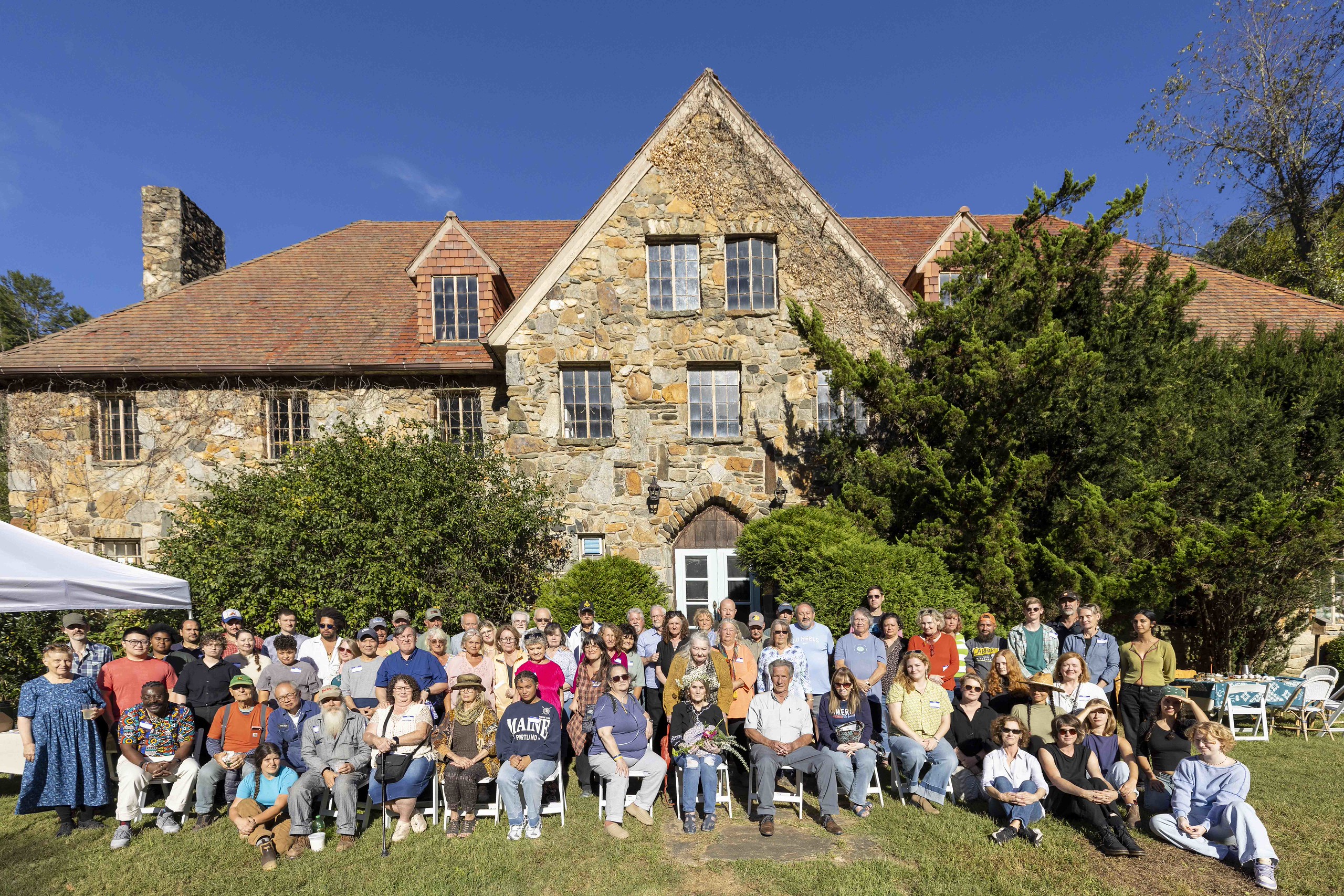
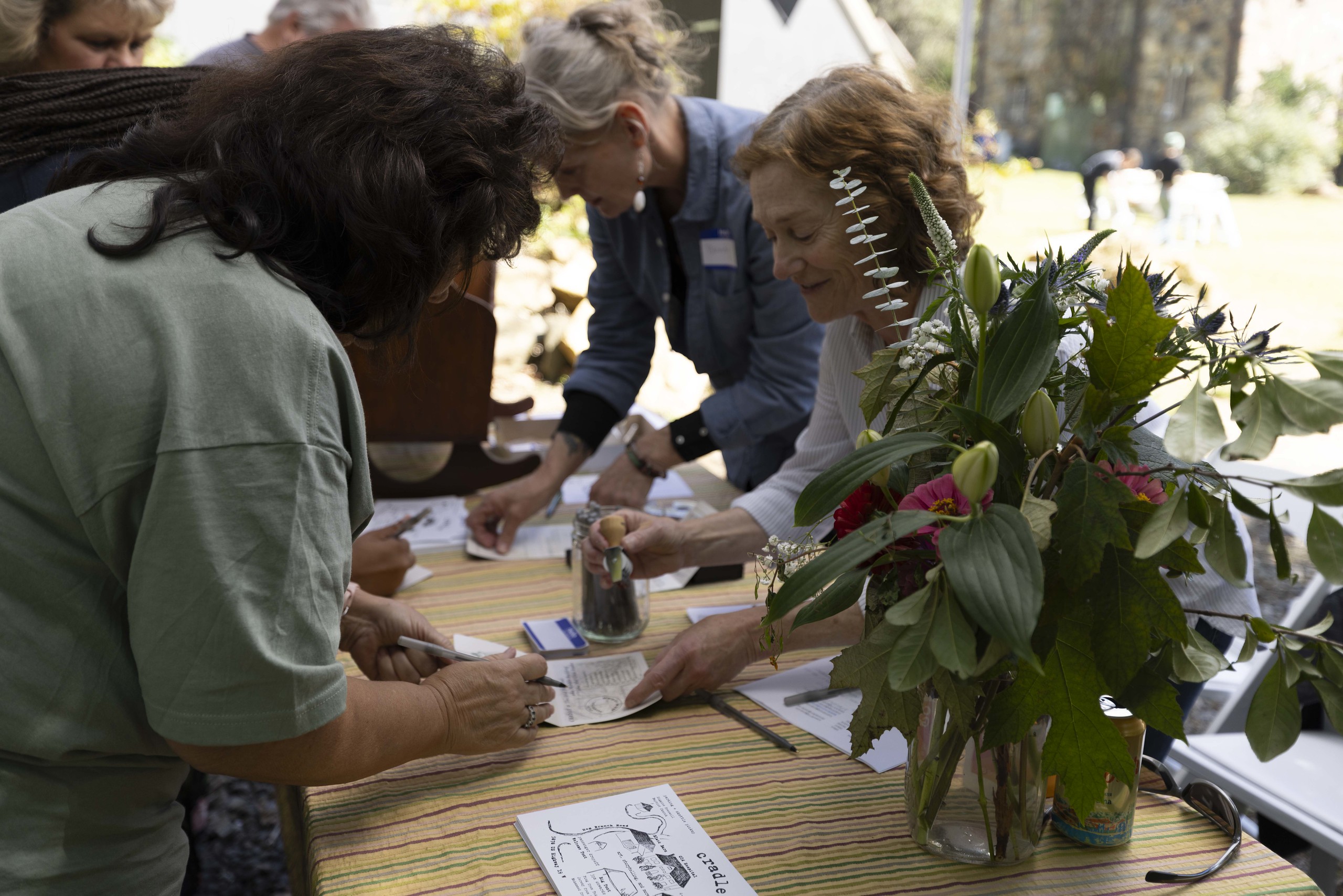
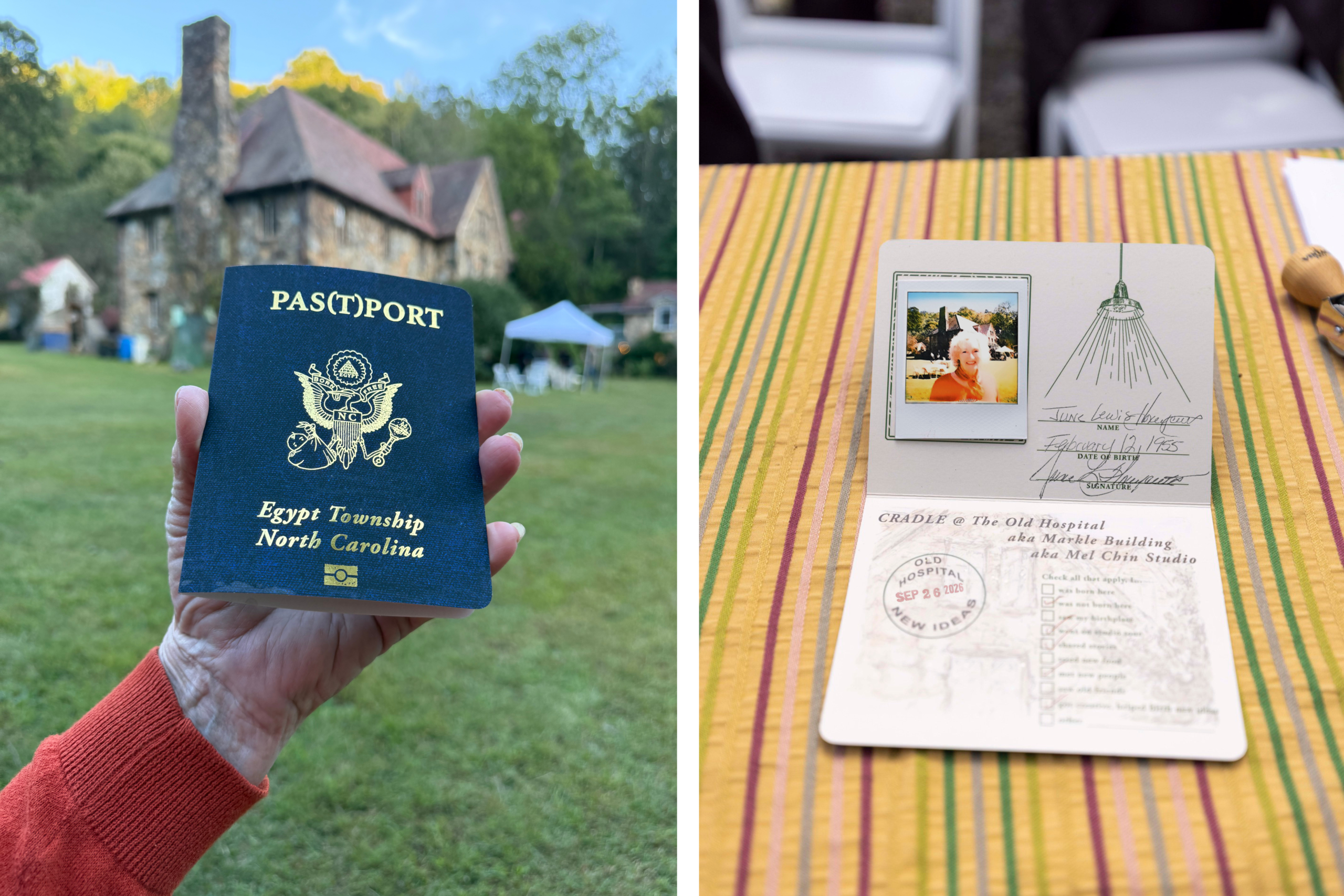
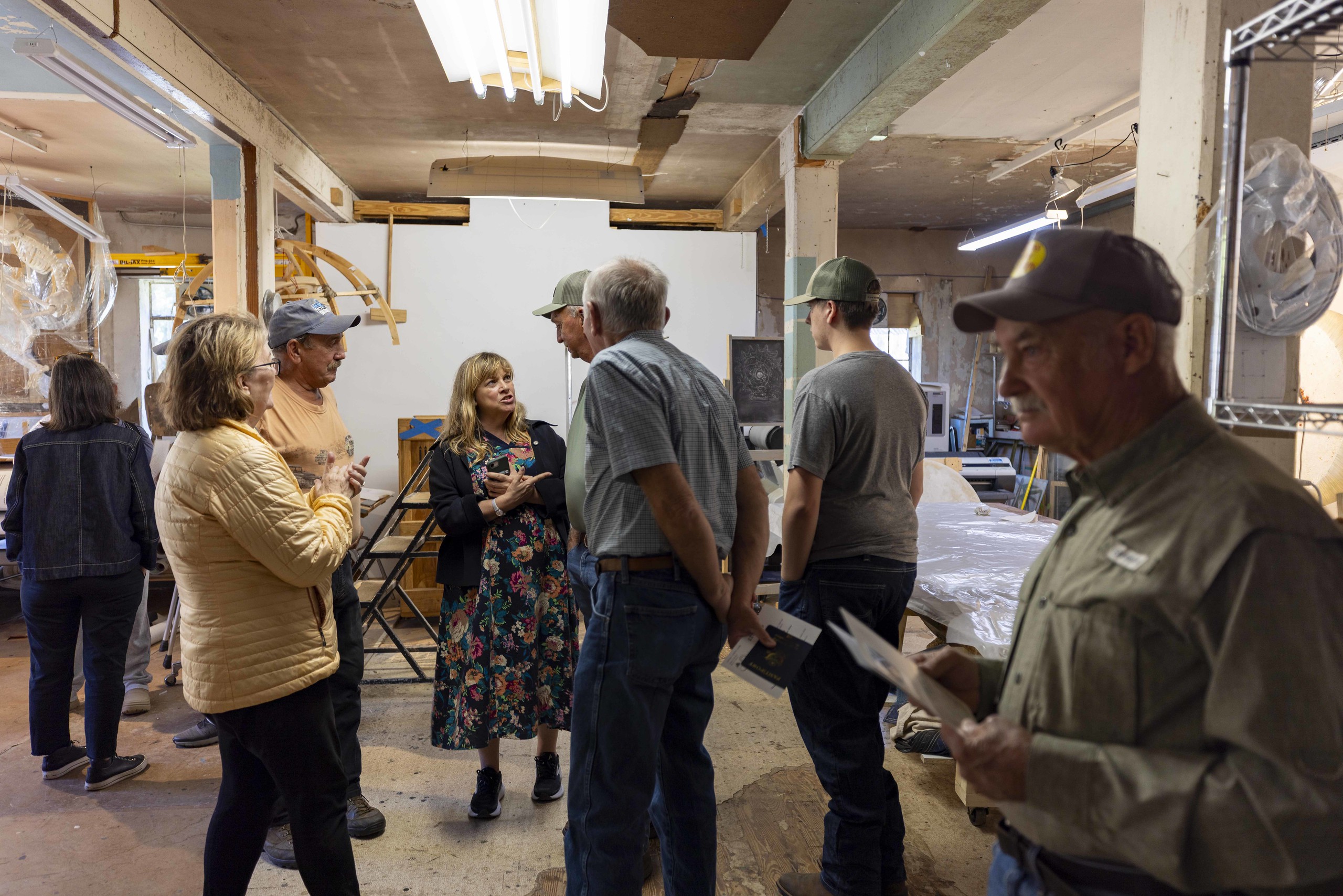
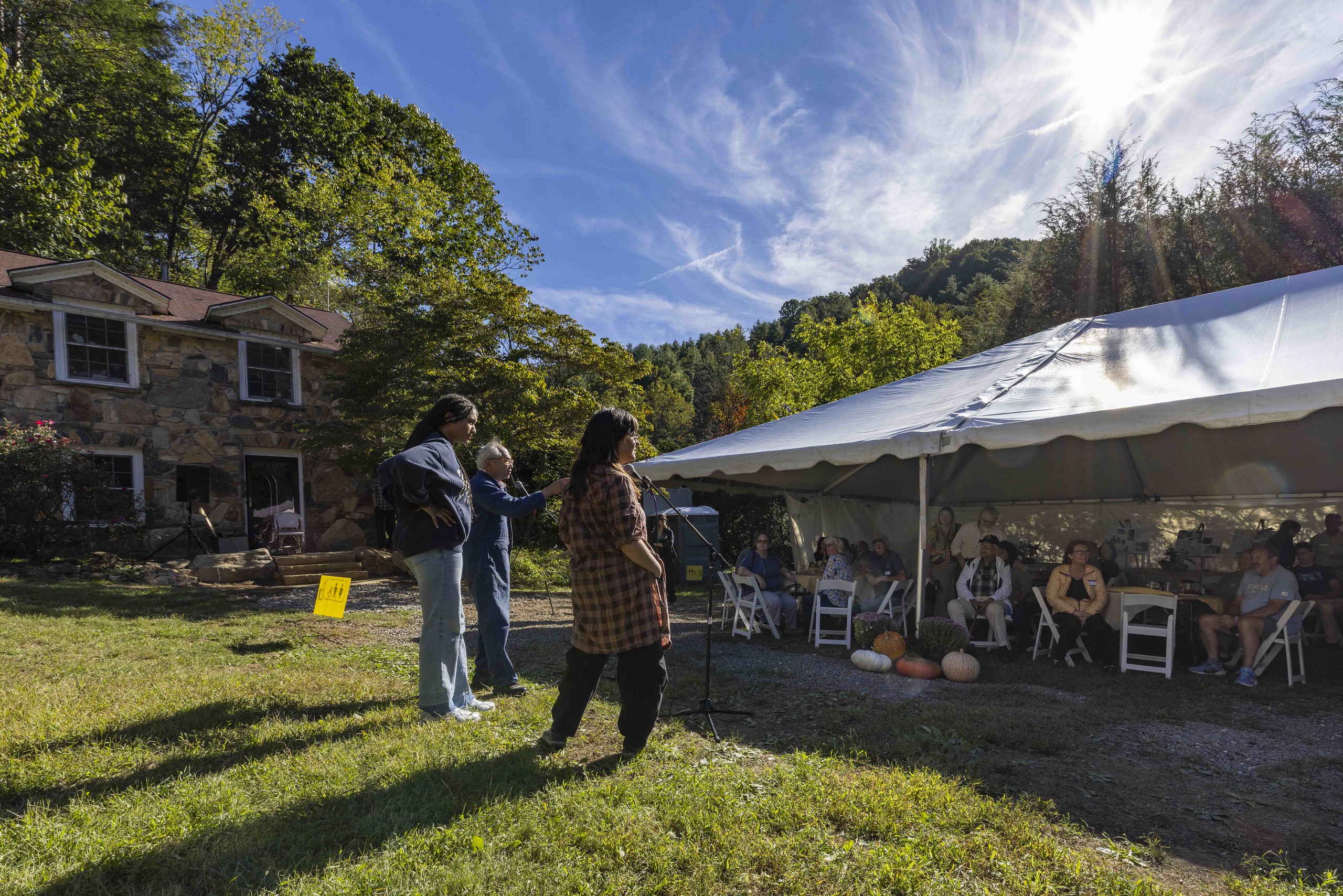
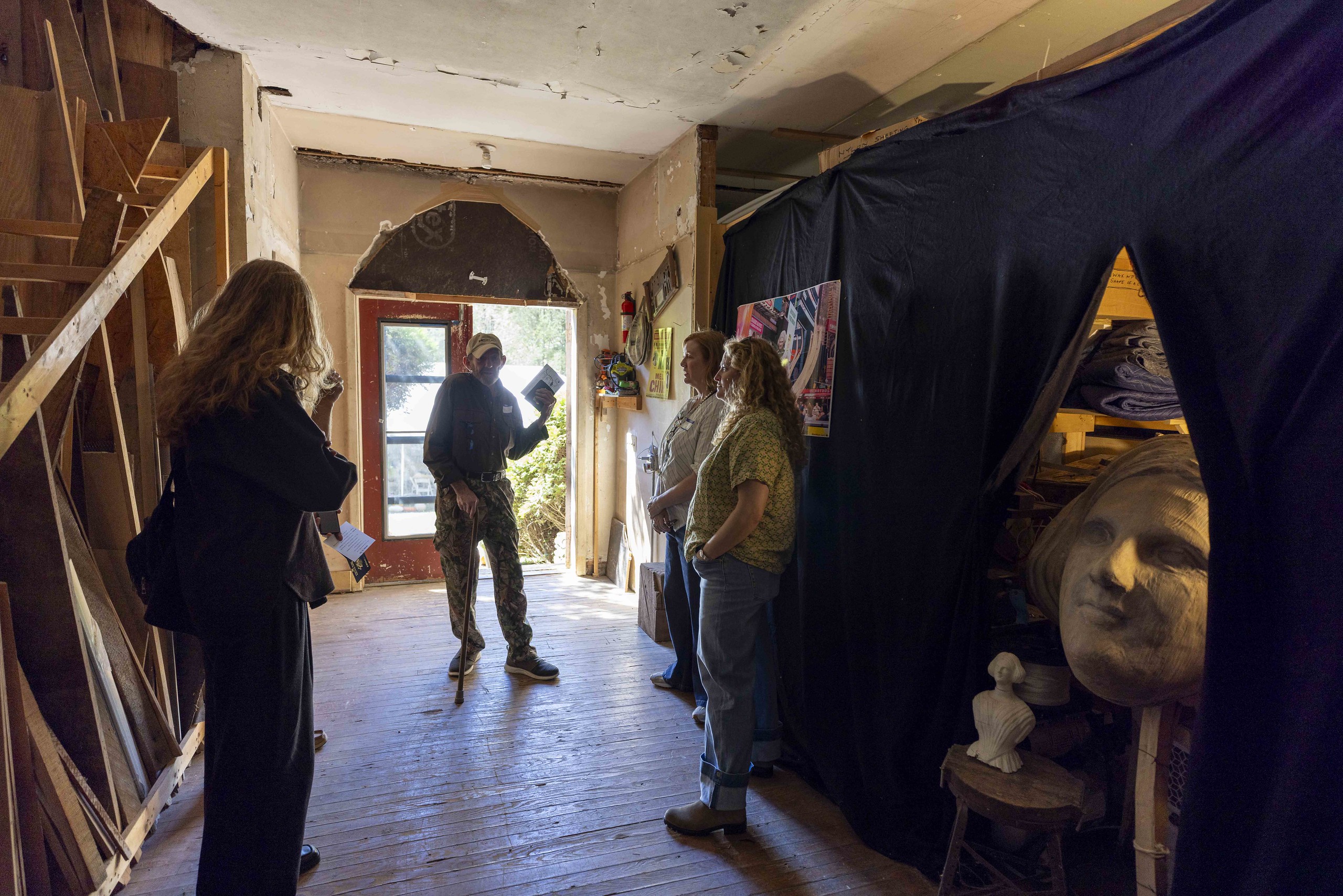
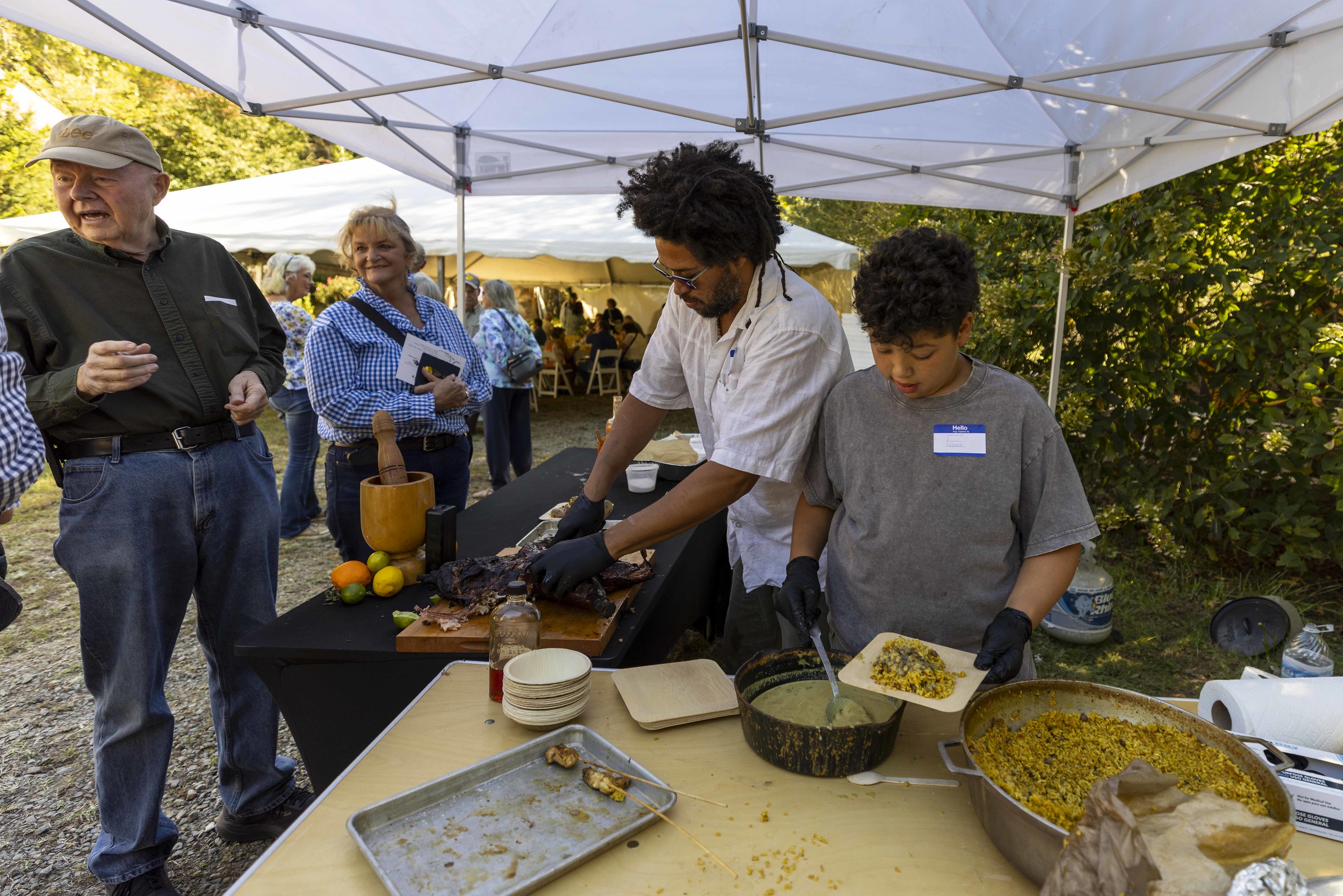
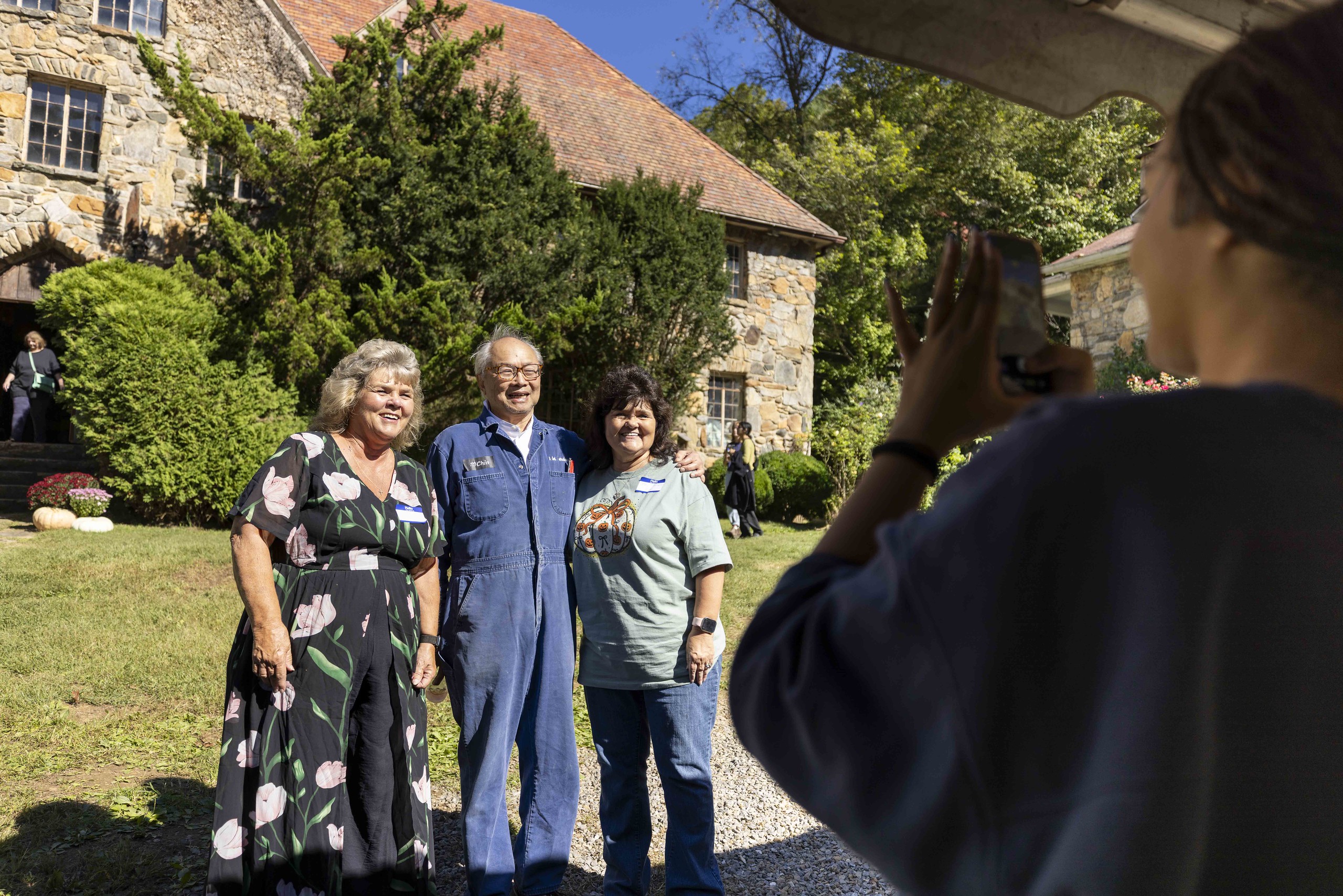
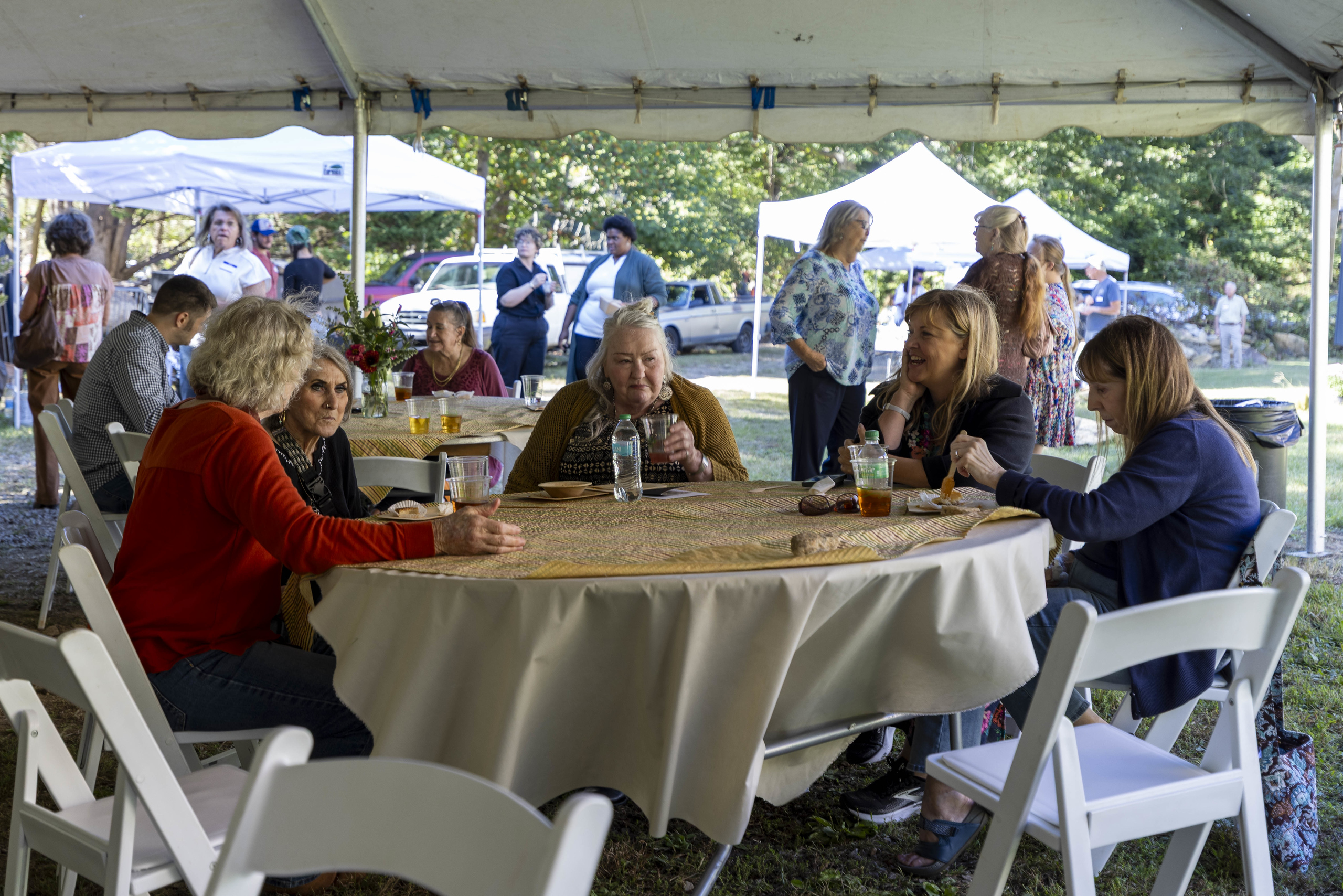
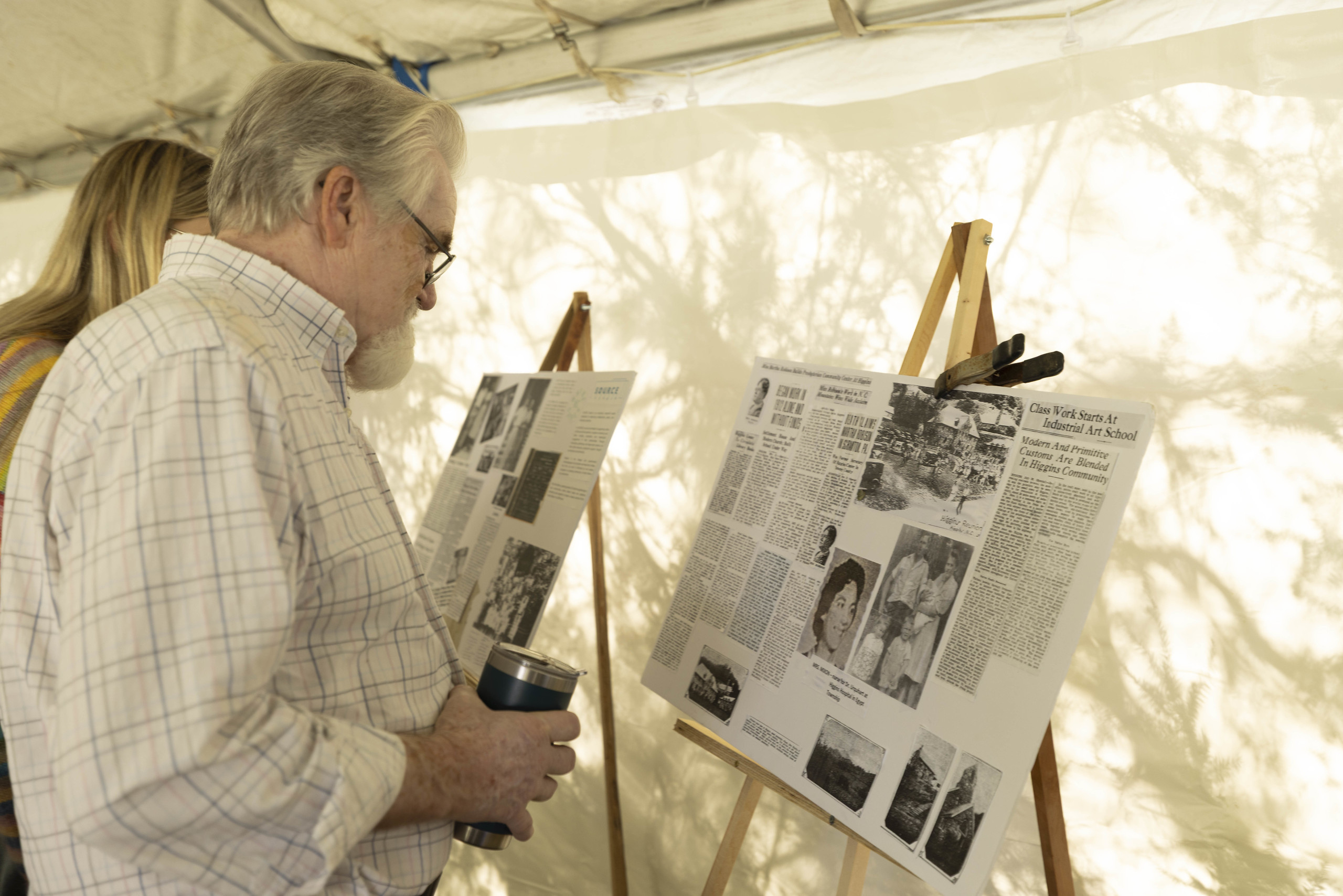
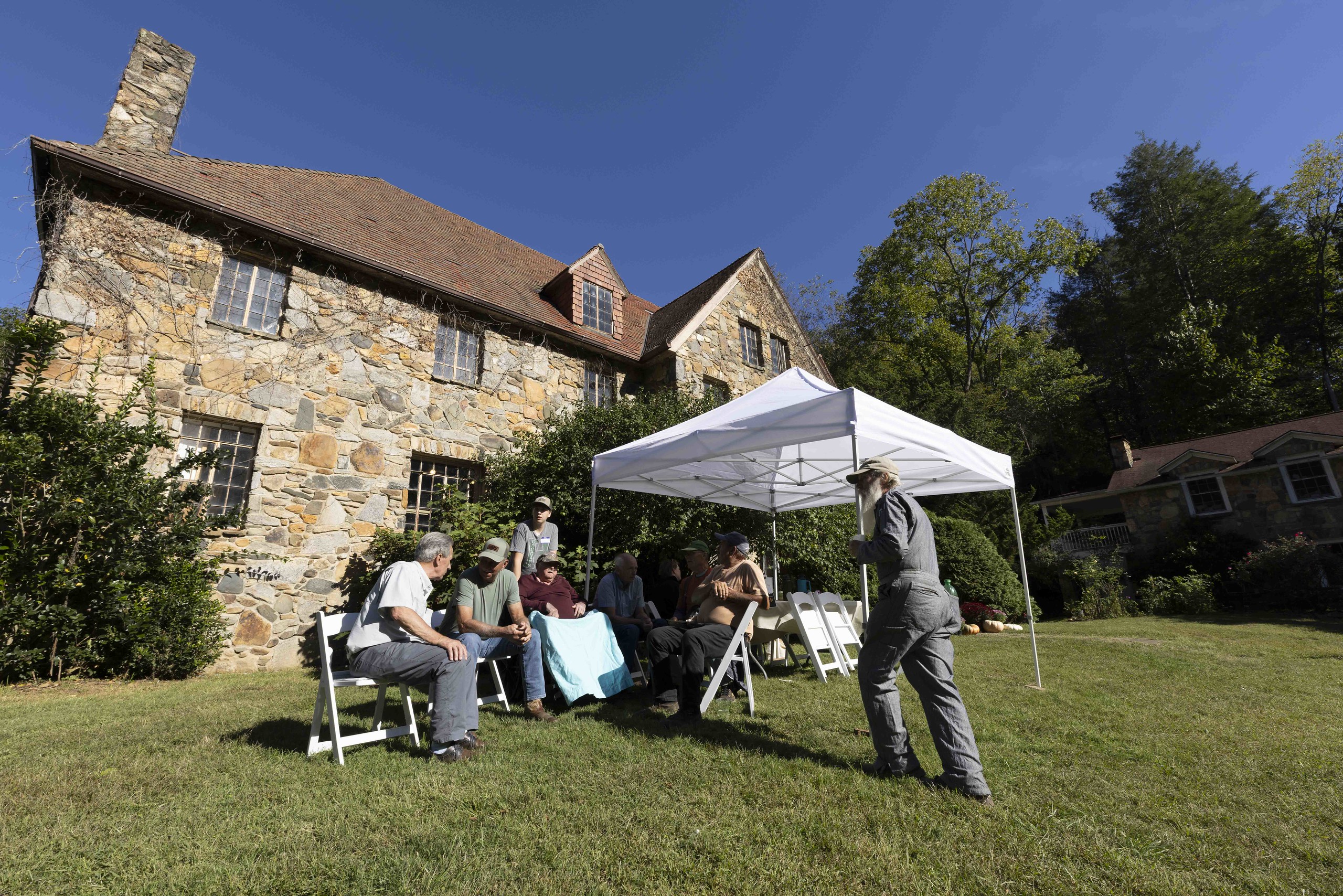
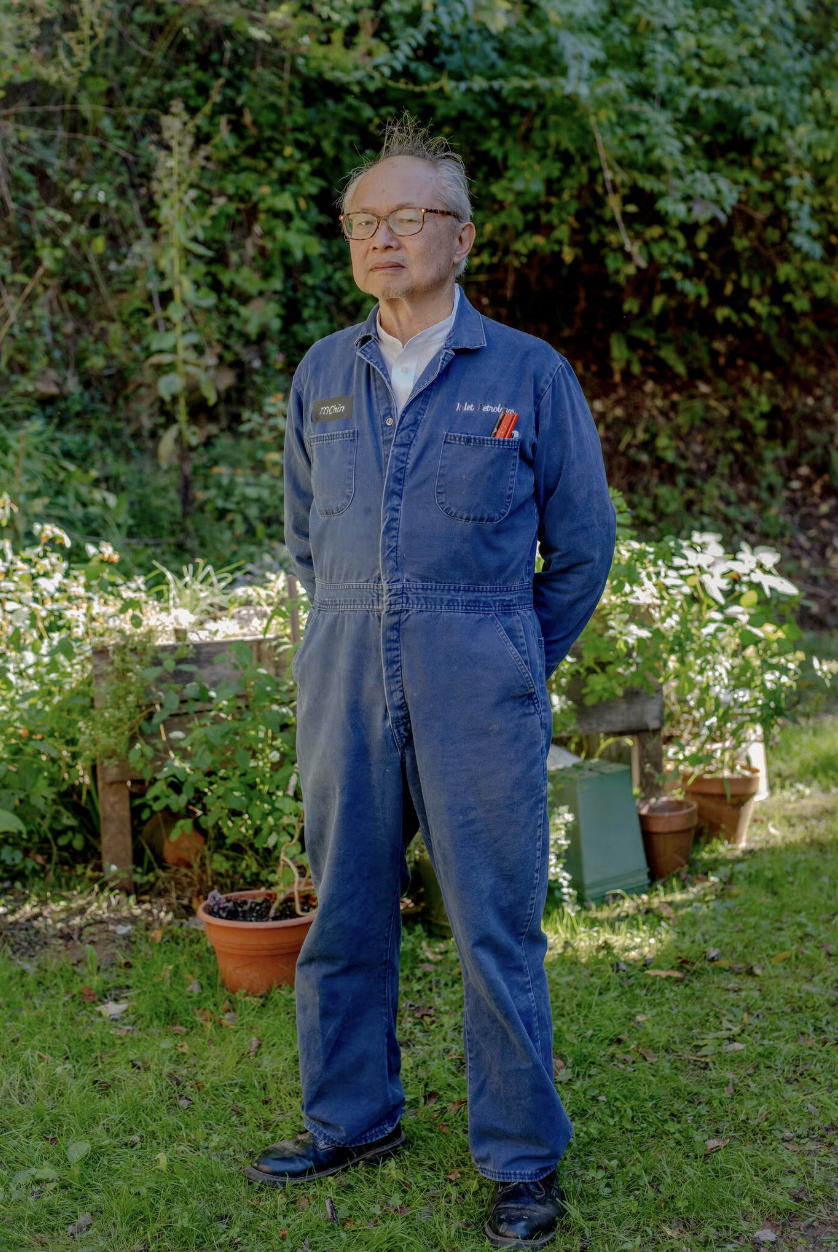
photo: Kaoly Gutierrez
Featured in the New York Times by Ted Loos
Read here: At These Rural Get-Togethers, the Gathering is the Point– And the Art
On a sunny Saturday in late September, around one hundred people gathered in the Blue Ridge Mountains at the studio of the artist Mel Chin. The afternoon event was part picnic, part community-building exercise, part homecoming — and part Conceptual artwork in progress…